How to Be a Good Father

“Where did I go wrong?” This question tormented Michael, * from South Africa. As hard as he had tried to be a good father, every time he thought about his wayward 19-year-old son, he wondered if he could have been a better parent.

In contrast, Terry, who lives in Spain, seems to have succeeded as a father. His son, Andrew, says: “Many of my earliest memories of my dad are of him reading to me, playing with me, and taking me on trips where he and I could spend time alone. He made learning fun.”

Admittedly, it is not easy to be a good father. But there are basic principles that can help. Many fathers have found that they and their families benefit when they follow the wisdom found in the Bible. Let us consider some of the Bible’s practical advice that can help fathers.

 1. Make Time for Your Family

As a father, how do you show your children that they are important to you? Surely there are many things you do for your children, including the sacrifices you make to feed them and provide them with an adequate home. You would not do such things if your children were not important to you. Yet, if you do not spend significant amounts of time with your children, they might conclude that you care more for other things, such as your job, your friends, or your hobbies, than you do for them.

When should a father begin to spend time with his children? A mother begins to form a bond with her child while it is still in the womb. Some 16 weeks after conception, an unborn baby might begin to hear. At this stage a father too can start to build his unique relationship with his unborn child. He can listen to the baby’s heartbeat, feel it kick, talk to it, and sing to it.

Bible Principle: In Bible times men were personally involved in the education of their children. Fathers were encouraged to spend time with their children on a regular basis, as is made evident by the Bible’s words at Deuteronomy 6:6, 7, which say: “These words that I am commanding you today must prove to be on your heart; and you must inculcate them in your son and speak of them when you sit in your house and when you walk on the road and when you lie down and when you get up.”

2. Good Fathers Are Good Communicators
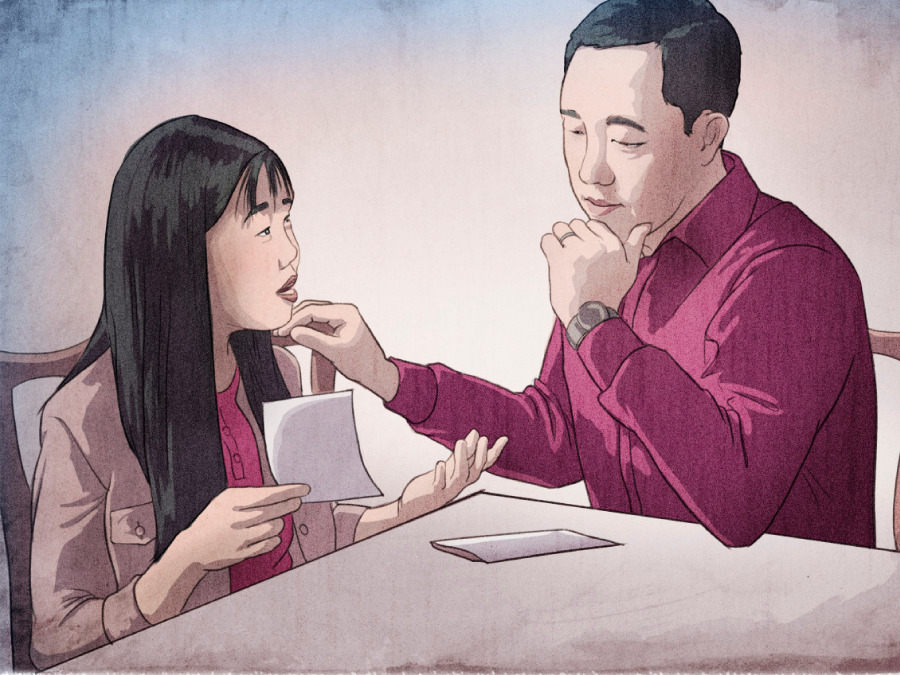
Listen calmly without being judgmental

In order to communicate effectively with your children, you must be a careful listener. You need to cultivate the ability to listen without overreacting.

If your children think that you will lose your temper quickly and be judgmental, they will have little incentive to express their inner feelings to you. But if you listen to them calmly, you will show that you are genuinely interested in them. They will in turn be far more likely to share their precious thoughts and feelings with you.

Bible Principle: The practical wisdom found in the Bible has proved to be beneficial in many aspects of daily life. For instance, the Bible says: “Every man must be swift about hearing, slow about speaking, slow about wrath.” (James 1:19) Fathers who apply this Bible principle are able to communicate better with their children.

 3. Give Loving Discipline and Commendation

Even when you feel frustrated or angry, the discipline you administer should be an expression of loving concern for the long-term welfare of your child. It includes advice, correction, education, and chastisement when needed.

Furthermore, discipline is much more effective when a father commends his children regularly. An ancient proverb says: “As apples of gold in silver carvings is a word spoken at the right time for it.” (Proverbs 25:11) Commendation enriches a child’s character. Children blossom when they are acknowledged and appreciated. A father who looks for opportunities to give commendation will help to build confidence in his children and motivate them not to give up trying to do what is right.

Bible Principle: “You fathers, do not be exasperating your children, so that they do not become downhearted.”Colossians 3:21.

4. Love and Respect Your Wife

The way a father exercises his role as a husband is certain to affect children. One group of experts on child development explains: “One of the best things a father can do for his children is to respect their mother. . . . A father and mother who respect each other and let their children know it provide a secure environment for them.”—The Importance of Fathers in the Healthy Development of Children. *

Bible Principle: “Husbands, continue loving your wives . . . Let each one of you individually so love his wife as he does himself.”Ephesians 5:25, 33.

 5. Apply God’s Practical Wisdom

Fathers who have heartfelt love for God can give their children a most precious heritage—an intimate relationship with their heavenly Father.

After decades of hard work raising six children, Antonio, one of Jehovah’s Witnesses, received the following note from one of his daughters: “Dear Dad, I just wanted to thank you for raising me to love Jehovah God, my neighbor, and myself—that is, to be a well-rounded individual. You showed me that you love Jehovah and that you care about me personally. Thank you, Dad, for putting Jehovah first in your life and for treating your children as gifts from God!”

Bible Principle: “You must love Jehovah your God with all your heart and all your soul and all your vital force. And these words that I am commanding you today must prove to be on your heart.”Deuteronomy 6:5, 6.

It is obvious that there is more involved in fatherhood than these five points and that, realistically, even when you try your best to be a good father, you are not going to be a perfect one. But to the extent that you apply these principles in a loving and balanced way, you really can be a good father. *

A Good Father Is Not Too Busy
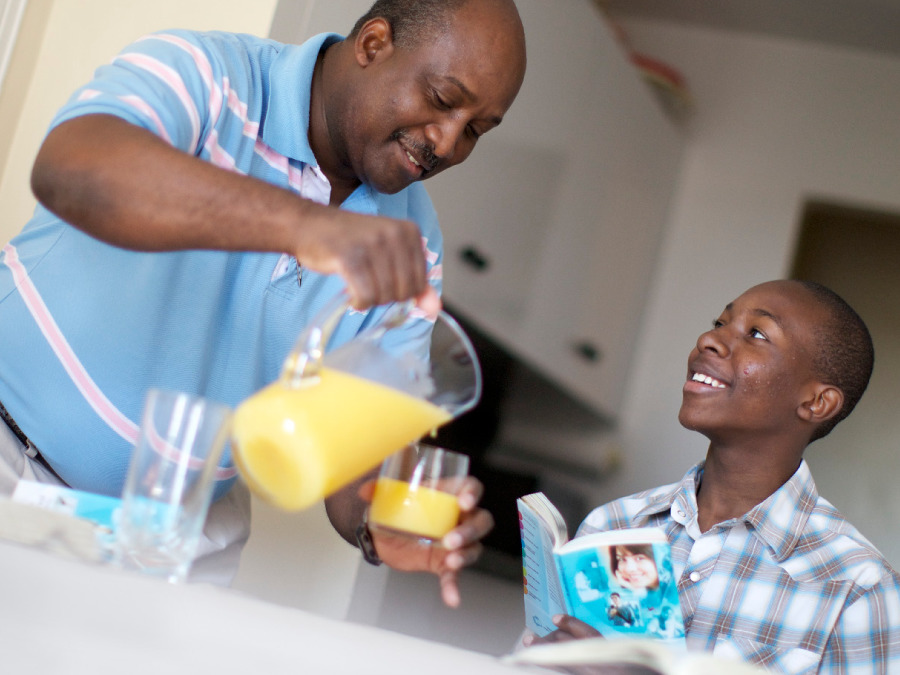
Sylvan, originally from Barbados, is a New York City bus driver who lives with his wife and three teenage sons. Sylvan has an especially challenging schedule, working from midafternoon until three or four o’clock in the morning. He has Thursday and Friday off, but Saturday and Sunday nights he has to work. Yet, he is not too busy for his children.

“It’s tough, but I try,” explains Sylvan. “Each of my boys needs some one-on-one time with me. Thursday afternoon is set aside for the oldest one when he gets home from school. On Friday, I schedule time for the middle boy. For the youngest one, I reserve Sunday morning.”

Fathers Who Are Appreciated

“He plays with me and reads to me at night.”—Sierra, aged 5.

“We can be having tons of fun playing, and he will say, ‘OK, it’s time to clean up now.’ At other times, after we’ve been working, he’ll stop and say, ‘Now it’s time to do something fun.’”—Michael, aged 10.

“My father has never allowed his secular work or his hobbies to prevent him from helping Mom at home. Even now, after so many years, he cooks at least as often as Mom does, washes the dishes, helps with cleaning the house, and treats her with love and tenderness.”—Andrew, aged 32.

HELP FOR THE FAMILY | MARRIAGE

A husband waits impatiently in the car while his wife waters plants

Dealing With Differences

THE CHALLENGE

A soccer ball and a book

You enjoy sports; your spouse would rather read. You are meticulous and efficient; your spouse is quite disorganized. You love to socialize; your spouse prefers privacy.

‘We just aren’t compatible!’ you tell yourself. ‘Why didn’t we notice that when we were dating?’

Likely you did notice it, at least to a degree. But back then you were probably quicker to make concessions—a skill that you would do well to revive, now that you are married. This article will help you do that. First, though, consider some facts about supposed incompatibilities.

WHAT YOU SHOULD KNOW

Some differences are serious. A big part of dating is determining compatibility. Hence, when serious differences are discovered while dating, many couples break up rather than unwisely entering into a polarized marriage. But what about less serious differences—the kind that are unavoidable in any marriage?

No two people are completely alike. Therefore, it is normal for spouses to have differences in one or more of the following areas:

Interests. “Outdoor activities have never appealed to me,” says a wife named Anna, * “but my husband grew up climbing snowy mountains and trekking for days through the bush.”

Habits. “My wife can stay up late at night and still jump up at 5:00 a.m., but I need seven to eight hours of sleep or else I get grumpy,” says a husband named Brian.

Traits. You might be reserved, while your spouse is expressive. “I grew up not talking about my personal problems,” says a husband named David, “but my wife came from a family where everything was discussed openly.”

Differences can be beneficial. “My way might be good, but that doesn’t mean it’s the only way,” says a wife named Helena.

 WHAT YOU CAN DO

Be supportive. A husband named Adam says: “My wife Karen has zero interest in sports. But she has come with me to several games and has even cheered along with me. On the other hand, Karen loves art museums, so I go with her, and we spend as much time there as she wants. I do my best to show an interest in art because it’s important to her.”—Bible principle: 1 Corinthians 10:24.

Expand your view. Your spouse’s outlook on things is not necessarily wrong just because it is different from yours. That is a lesson that a husband named Alex learned. “I always felt that a straight line is the shortest way from point to point and that any other choice would be deficient,” he says. “But being married has helped me to realize that there are many ways to get from to and that each method is effective in its own way.”—Bible principle: 1 Peter 5:5.

Be realistic. Being compatible does not mean being identical. So do not conclude that your marriage was a mistake simply because a few differences have become evident. “Lots of people fall back on ‘I was blinded by love,’” says the book The Case Against Divorce. However, “every day you spent together happy,” continues the book, “shows that despite whatever innate differences you have, you can love each other.” Try to “continue putting up with one another . . . even if anyone has a cause for complaint.”—Colossians 3:13.

Try this: Write down what you like, love, and find compatible about your spouse. Then write down the things that you find incompatible. You may find that your differences are less serious than you think. The list will also reveal where you can be more tolerant or supportive of your spouse. “I appreciate it when my wife adjusts to me, and I know she appreciates it when I adjust to her,” says a husband named Kenneth. “Even if it means a sacrifice on my part, seeing her happy makes me happy.”—Bible principle: Philippians 4:5.

KEY SCRIPTURES

  • “Let each one keep seeking, not his own advantage, but that of the other person.”—1 Corinthians 10:24.
  • “Clothe yourselves with humility toward one another.”—1 Peter 5:5.
  • “Let your reasonableness become known.”—Philippians 4:5.
Charlie and Ramona

CHARLIE AND RAMONA

“If you think, ‘We just aren’t well-matched,’ you will keep finding evidence to support that view. Instead, try to work as a team and see the differences in your mate as spice, not poison. Obstacles do not have to be a dead end.”

Benjamin and Chelsea

BENJAMIN AND CHELSEA

“Some say, ‘We don’t like the same music’ or, ‘We don’t watch the same movies.’ We could say those things and more. But had we discontinued our relationship because of our ‘incompatibilities,’ we would have missed out on the joys we’ve shared being together and doing the things that we do both enjoy.”

Keys to Family Happiness

A wife irritated with her husband

Surviving the First Year of Marriage

He says: “I am surprised to find that my wife and I are so different! For example, I like to get up early, but she likes to stay up late. As for her changes of mood, those baffle me! And another thing​—when I cook, she becomes so critical, especially of the way I clean my hands on the dishcloth.”

She says: “My husband is a man of few words. But I’m used to my family. They talk a lot, particularly at mealtimes. And when my husband cooks, he uses the same cloth to dry the dishes and to clean his hands! That irritates me! Why are men so difficult to understand? How do people make a marriage succeed?”

IF YOU are newly married, have you faced similar challenges? Does it seem that your mate suddenly has acquired faults and foibles that were absent when you were dating? How can you reduce the impact of the “everyday troubles that married people will have”?​—1 Corinthians 7:28Today’s English Version.

First, do not expect that just because you exchanged wedding vows, you and your spouse become instant experts at married life. You might have acquired valuable social skills when you were single, and they might have improved while you were dating. However, marriage will test those skills in new ways and will likely require that you gain new ones. Will you make mistakes? Certainly. Can you gain the skills you need? Absolutely!

The best way to improve any skill is to consult an expert on the subject and then to apply the advice he gives. The foremost expert on marriage is Jehovah God. After all, he is the One who created us with the desire to marry. (Genesis 2:22-24) Note how his Word, the Bible, can help you overcome challenges and acquire the skills you need to make your marriage last beyond the first year.

SKILL 1. LEARN TO CONSULT TOGETHER

What are the challenges?

Keiji, * a husband who lives in Japan, sometimes forgot  that his decisions affected his spouse. “I would accept invitations without consulting my wife,” he says. “Later, I would discover that it was not convenient for her to keep those appointments.” Allen, a husband in Australia, says: “I felt that it was unmanly to consult my wife about things.” He faced a challenge because of his background. It was similar with Dianne, who lives in Britain. She says: “I was used to asking my family for advice. So at first I would consult them and not my husband when making decisions.”

What is the solution?

Remember that Jehovah God views a married couple as being “one flesh.” (Matthew 19:3-6) In his eyes, no other human relationship is more important than the one that exists between husband and wife! To keep that bond strong, good communication is vital.

A husband and wife can learn much by examining the way Jehovah God communicated with Abraham. For example, please read the discussion recorded at Genesis 18:17-33. Note that God honored Abraham in three ways. (1) Jehovah explained what he intended to do. (2) He listened while Abraham explained his views. (3) To the extent possible, Jehovah adapted his course of action to accommodate Abraham. How could you follow the same pattern when you consult with your spouse?

TRY THIS: When discussing matters that will affect your marriage partner, (1) explain how you would like to handle the situation, but present your thoughts as suggestions, not final decisions or ultimatums; (2) ask your spouse to express his or her opinion, and acknowledge your spouse’s right to hold a different viewpoint; and (3) “let your reasonableness become known” by adopting your mate’s preferences whenever possible.​—Philippians 4:5.

SKILL 2. LEARN TO BE TACTFUL

What is the challenge?

Depending on your family or cultural background, you might be in the habit of expressing your opinion firmly, even bluntly. For example, Liam, who lives in Europe, says: “Where I come from, people tend to be tactless. My blunt way of expressing myself often upset my wife. I had to learn to be more gentle.”

What is the solution?

Do not assume that your mate wants to be spoken to in the same  manner that you are used to. (Philippians 2:3, 4) The counsel that the apostle Paul gave a missionary is also helpful for newlyweds. He wrote: “A slave of the Lord does not need to fight, but needs to be gentle.” In the original Greek, the word that is translated “gentle” can also be rendered “tactful.” (2 Timothy 2:24; footnote) Tact is the ability to discern the delicacy of a situation and to deal with the matter kindly, without causing offense.

TRY THIS: When you are annoyed with your mate, imagine that instead of talking to your spouse, you are conversing with a good friend or with your employer. Would you still use the same tone of voice or choice of words? Then think of reasons why your spouse deserves to be spoken to with even more respect and tact than does your friend or employer.​—Colossians 4:6.

SKILL 3. LEARN TO ADAPT TO YOUR NEW ROLES

What is the challenge?

A husband may at first exercise his headship clumsily, or a wife may be unaccustomed to making tactful suggestions. For example, Antonio, a husband in Italy, says: “My father hardly ever consulted my mother about family decisions. So at first, I ruled my family as if I were a monarch.” Debbie, a wife in Canada, says: “I demanded that my husband be tidier. But my bossy approach only seemed to make him more stubborn.”

What is the solution for a husband?

Some husbands confuse what the Bible says about wifely subjection with what it says about the obedience of a child to his parent. (Colossians 3:20;1 Peter 3:1) However, the Bible says that a husband is to “stick to his wife, and the two will be one flesh”; it does not say the same about a parent and a child. (Matthew 19:5) Jehovah describes a wife as a complement,  or counterpart, of her husband. (Genesis 2:18) He never refers to a child as being a complement, or counterpart, of a parent. What do you think​—if a husband treats his wife like a child, is he honoring the marriage arrangement?

In fact, God’s Word urges you to treat your wife in the same manner that Jesus treats the Christian congregation. You can make it easier for your wife to view you as her head if (1) you do not expect her immediately and flawlessly to express her subjection to you and (2) you love her as you do your own body, even when difficulties arise.​—Ephesians 5:25-29.

What is the solution for a wife?

Acknowledge that your husband is now your God-appointed head. (1 Corinthians 11:3) If you honor your husband, you honor God. If you reject his headship, you reveal how you feel not only about your husband but also about God and his requirements.​—Colossians 3:18.

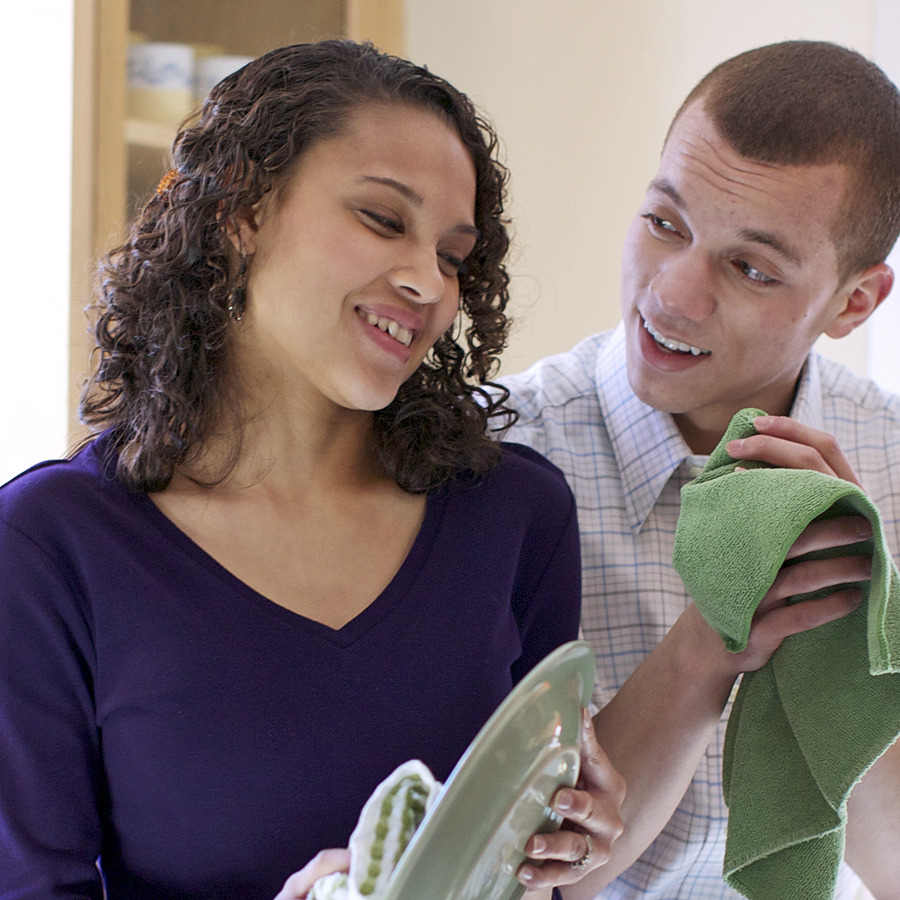
A husband and wife washing dishes

When discussing challenging issues, learn to attack the problem​—not your husband’s character. Queen Esther, for example, wanted her husband, King Ahasuerus, to correct an injustice. Rather than attack him personally, she expressed herself tactfully. Her husband accepted her suggestion and eventually did the right thing. (Esther 7:1-4; 8:3-8) Your husband is more likely to learn to love you deeply if (1) you allow him time to master his new role as head of a family and (2) you treat him with respect, even when he makes mistakes.​—Ephesians 5:33.

TRY THIS: Rather than taking note of ways in which you feel your spouse ought to change, keep a changes-I-need-to-make list. Husbands: When you upset your wife by the way you exercise or fail to exercise your headship, ask her how you can improve, and then write the suggestion down. Wives: When your husband feels that he is not being shown respect, ask him how you can improve, and take note of the suggestion.

Maintain Reasonable Expectations

Learning to maintain a happy, balanced marriage relationship is like learning to ride a bicycle. You expect some tumbles as you gain confidence as a cyclist. Likewise, you should expect to make some embarrassing mistakes as you gain experience in marriage.

Maintain a sense of humor. Take your mate’s concerns seriously, but learn to laugh at your own blunders. Seize opportunities to make your mate rejoice during your first year of marriage. (Deuteronomy 24:5) Above all, allow God’s Word to guide your relationship. If you do, your marriage will grow stronger year after year.

The Bible Saved Our Marriage

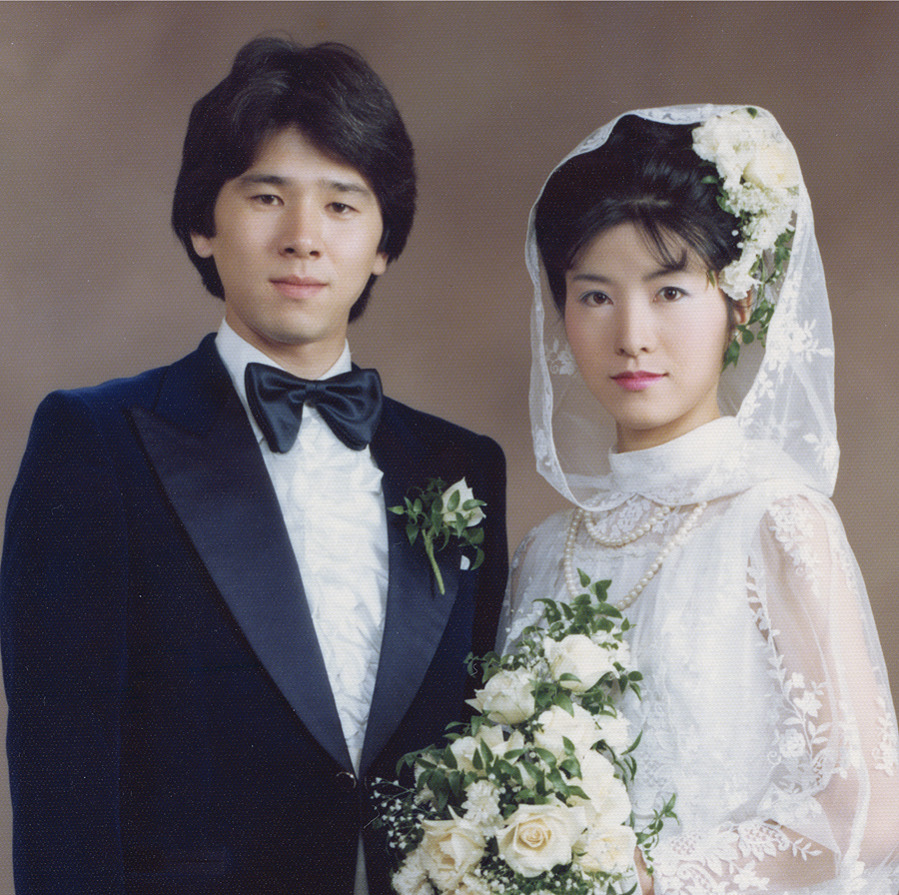
A couple on their wedding day

Toru and Akiko were in love when they were first married. But only eight months later, this Japanese couple decided to divorce. They relate what happened.

Toru: “I discovered that my wife and I were less compatible than I thought. For example, when we watched TV, I liked sports, but she liked dramas. I liked going out, but she liked staying home.”

Akiko: “Toru did whatever his family asked, but he did not consult with me. I asked him, ‘Who is more important to you, your mother or me?’ Also, I was shocked at how Toru would stretch the truth. I told him that one lie leads to another and that if he didn’t stop, our marriage could not continue.”

Toru: “I became frustrated and asked a senior colleague for advice on how to deal with my wife. ‘Just tell her to shut up,’ he said. ‘If she complains, knock her down.’ One time, I slapped Akiko’s face and turned over the table. There was a big fight, and she left. I had to bring her back from a hotel in Tokyo. Finally, we decided to divorce. As I left home for the office that morning, my wife began packing her things.”

Akiko: “The doorbell rang as I was carrying my bags to the front door. A woman was standing there. She was one of Jehovah’s Witnesses. I invited her in.”

Toru: “When I arrived at my office, I was having second thoughts about divorce, so I hurried back home. When I arrived, I found Akiko talking to this lady. The lady said to me: ‘You need something that the two of you can do together. Would you like to study the Bible?’ ‘Yes,’ I said, ‘anything that might save our marriage!’”

Akiko: “The lady made arrangements for us to study the Bible. A turning point came when we read the Bible’s description of the marriage arrangement. It says: ‘That is why a man will leave his father and his mother and he must stick to his wife and they must become one flesh.’”​—Genesis 2:24.

Toru: “I got the point right away. I told my parents, ‘From now on, I am going to discuss things with my wife before making decisions.’ I also stopped drinking too much. And when I learned that God hates lies, I tried to speak only the truth.”

A couple looking at photos

Akiko: “I too changed. For example, I used to defy Toru. But when I saw how he was applying Bible principles, I became more supportive of him. (Ephesians 5:22-24) We have been happily married now for over 28 years. We were able to overcome our problems by getting to know each other better and by applying the wise counsel found in the Bible.”

ASK YOURSELF . . .

  • Have I made my spouse my closest confidant, or do I prefer to consult with others?
  • Within the last 24 hours, specifically what have I done that shows that I love and respect my spouse?

Look to God for a Happy Marriage

A husband and wife on their wedding day

“The one who created them from the beginning made them male and female.”—Matthew 19:4

Jehovah * God performed the first marriage. The Bible tells us that he made the first woman and “brought her to the man.” Adam was so happy that he said: “This is at last bone of my bones and flesh of my flesh.” (Genesis 2:22, 23) Jehovah still wants married people to be happy.

When you get married, you may think that everything will be perfect. Realistically, though, even a husband and a wife who truly love each other will have some problems. (1 Corinthians 7:28) In this brochure, you will find Bible principles that, if applied, can make your marriage and family happy.—Psalm 19:8-11.


1 ACCEPT THE ROLE JEHOVAH GAVE YOU

WHAT THE BIBLE SAYS: The husband is the head of the family.—Ephesians 5:23.

If you are a husband, Jehovah expects you to care for your wife tenderly. (1 Peter 3:7) He made her as a complement of you, and he wants you to treat her with dignity and love. (Genesis 2:18) You must love your wife so much that you are willing to put her interests ahead of your own.—Ephesians 5:25-29.

If you are a wife, Jehovah expects you to respect your husband deeply and to help him fulfill his role. (1 Corinthians 11:3; Ephesians 5:33) Support his decisions and wholeheartedly cooperate with him. (Colossians 3:18) When you do, you will be beautiful in the eyes of your husband and of Jehovah.—1 Peter 3:1-6.

WHAT YOU CAN DO:

  • Ask your mate how you can be a better husband or wife. Listen carefully, and do what you can to improve
  • Be patient. It will take time for both of you to learn how to make each other happy

2 REALLY CARE ABOUT YOUR MATE’S FEELINGS

WHAT THE BIBLE SAYS: You need to look out for the interests of your marriage mate. (Philippians 2:3, 4) Treat your mate as precious, remembering that Jehovah requires his servants to be “gentle toward all.” (2 Timothy 2:24) “Thoughtless speech is like the stabs of a sword, but the tongue of the wise is a healing.” So choose your words carefully. (Proverbs 12:18) Jehovah’s spirit will help you to speak with kindness and love.—Galatians 5:22, 23; Colossians 4:6.

WHAT YOU CAN DO:

  • Pray for help to remain calm and to keep an open mind before discussing serious matters with your mate
  • Think carefully about what you will say and how you will say it


3 THINK AS A TEAM

WHAT THE BIBLE SAYS: When you get married, you become “one flesh” with your mate. (Matthew 19:5) But you are still two individuals and may have different opinions. So you need to learn to be united in your thoughts and feelings. (Philippians 2:2) Unity is essential when making decisions. The Bible says: “By consultation, plans will succeed.” (Proverbs 20:18) Let Bible principles guide you as you make important decisions together.—Proverbs 8:32, 33.

A married couple work as a team, doing laundry and washing dishes

WHAT YOU CAN DO:

  • Share your feelings with your mate, not just information or opinions
  • Consult with your mate before making commitments

BE REALISTIC AND OPTIMISTIC

Do not expect perfection of yourself or of your mate. (Psalm 103:14; James 3:2) Choose to focus on your mate’s good qualities. Be confident that Bible principles will work, and be patient. (2 Timothy 3:16) Jehovah will reward your efforts to follow his advice, and your marriage will become stronger year by year.—Galatians 6:9.

ASK YOURSELF . . .

  • Can my mate sense that I care for him or her more than myself?
  • What have I done today to show love and respect to my mate?

Keys to Family Happiness

A husband and his upset wife

 Treating Your Mate With Respect

Will * says: “When Rachel is upset, she cries for a long time. If we sit down to talk, she gets irritable or even gives me the silent treatment. Nothing seems to work. I feel like giving up.”

Rachel says: “When Will came home, I was crying. I tried to explain why I was upset, but he cut me off. He told me that it wasn’t that serious, and I should just get over it. That made me even more upset.”

CAN you relate to Will or Rachel? Both of them want to communicate, but they often get frustrated. Why?

Men and women communicate differently, and they have unique needs. A woman may long to share her feelings openly and often. Many men, on the other hand, try to preserve peace by solving problems quickly and avoiding thorny issues. How, then, can you bridge these differences and communicate with your husband or wife? By treating your mate with respect.

A respectful person values others and seeks to understand their feelings. Since childhood, you may have learned to respect people who have more authority or experience than you have. In marriage, however, the challenge is to show respect for someone with whom you are on more of an equal footing​—your mate. “I knew that Phil would listen with patience and understanding to anyone else who spoke to him,” says Linda, who has been married for eight years. “I wanted him to be just as empathetic with me.” Likely, you listen patiently and speak respectfully to friends and even strangers. Yet, are you just as considerate to your mate?

Disrespect creates tension in the home and leads to bitter conflict. A wise ruler stated: “A dry crust of bread eaten in peace and quiet is better than a feast eaten where everyone argues.” (Proverbs 17:1Contemporary English Version) The Bible tells a husband to treat his wife with honor, or respect. (1 Peter 3:7)  “The wife” too “should have deep respect for her husband.”​—Ephesians 5:33.

How can you communicate respectfully? Consider some practical advice found in the Bible.

When Your Mate Has Something to Say

The Challenge:

Many people like to talk more than they like to listen. Are you one of them? The Bible describes as foolish anyone who is “replying to a matter before he hears it.” (Proverbs 18:13) So before you talk, listen. Why? “I prefer it when my husband doesn’t try to fix my problems right away,” says Kara, who has been married for 26 years. “He doesn’t even have to agree or figure out why the problem arose. I just want him to listen to me and validate my feelings.”

On the other hand, some men and women hesitate to express themselves and feel uncomfortable if their mate pressures them to talk about their feelings. Lorrie, who was recently married, discovered that her husband takes a long time to share his feelings. “I have to be patient,” she says, “and wait for him to open up.”

A Solution:

If you and your mate need to talk about something potentially divisive, raise the matter when both of you are calm and relaxed. What if your spouse is reluctant to speak up? Recognize that “a person’s thoughts are like water in a deep well, but someone with insight can draw them out.” (Proverbs 20:5Today’s English Version) If you draw a bucket out of a well too quickly, you will lose a lot of water. Similarly, if you confront your mate too forcefully, your mate may become defensive and the opportunity to draw him or her out may be lost. Instead, ask questions gently and respectfully, and be patient if your mate does not articulate feelings as quickly as you would like.

When your spouse does speak, “be swift about hearing, slow about speaking, slow about wrath.” (James 1:19) A good listener listens not only with the ears but also with the heart. When your mate speaks, try to understand his or her feelings. Your mate will sense your level of respect​—or disrespect—​by the way you listen.

Jesus taught us how to listen. For example, when a sick man approached him for help, Jesus did not immediately solve the problem. First, he listened to the man’s entreaty. Then he allowed what he heard to move him deeply. Finally, he healed the man. (Mark 1:40-42) When your mate speaks, follow the same pattern. Remember, he or she is likely seeking heartfelt empathy, not a quick solution. So listen closely. Allow your emotions to be touched. Then, and only then, respond to your mate’s needs. By doing so, you will show that you respect your mate.

TRY THIS: The next time your mate begins speaking to you, resist the urge to respond immediately. Wait until your spouse has finished talking and you understand what was expressed. Later, approach your mate and ask, “Did you feel that I was really listening to you?”

When You Have Something to Say

The Challenge:

“Sitcoms make it appear normal to speak badly about one’s mate and to be insulting and sarcastic,” observes Linda, quoted earlier. Some grow up in homes where disrespectful speech is typical. Later, when they marry, they find it difficult to avoid this pattern in their own family. Ivy, who lives in Canada, relates: “I grew up in an environment where sarcasm, screaming, and name-calling were the norm.”

A Solution:

When you talk to others about your mate, share “whatever saying is good  for building up as the need may be, that it may impart what is favorable to the hearers.” (Ephesians 4:29) Impart a favorable impression of your spouse by the way you speak about him or her.

Even when you are alone with your mate, resist the urge to use sarcasm and name-calling. In ancient Israel, Michal got angry with her husband, King David. She spoke sarcastically and said that he acted “just as one of the empty-headed men.” Her words offended David, but they also displeased God. (2 Samuel 6:20-23) The lesson? When you speak with your mate, choose your words carefully. (Colossians 4:6; footnote) Phil, married for eight years, admits that he and his wife still have disagreements. He has noticed that, at times, what he says makes the situation worse. “I have come to realize that ‘winning’ an argument is actually a loss. I find that it is much more satisfying and beneficial to build up our relationship.”

An elderly widow in ancient times encouraged her daughters-in-law to “find a resting-place each one in the house of her husband.” (Ruth 1:9) When both husband and wife dignify each other, they make their home “a resting-place.”

TRY THIS: 

With your mate, set aside time to discuss the suggestions under this subheading. Ask your spouse: “When I talk about you in public, do you feel honored or put down? What adjustments can I make to improve?” Really listen as your spouse shares his or her feelings. Try to apply the suggestions you hear.

Accept Your Mate’s Differences

The Challenge:

Some newlyweds have mistakenly concluded that what the Bible calls being “one flesh” means that the couple must have one opinion or personality. (Matthew 19:5) However, they quickly discover that such thinking is idealistic. Once they are married, their differences often lead to arguments. Linda says: “One major difference between us is that Phil worries less than I do. Sometimes he is able to relax when I’m worried, so I end up feeling angry because it appears that he doesn’t care about something as much as I do.”

A Solution:

Accept each other as you are, and respect what is different about your mate. To illustrate: Your eyes work differently than your ears; yet they cooperate so you can cross the road safely. Adrienne, who has been married for nearly three decades, says: “As long as our viewpoints don’t violate God’s Word, my husband and I allow each other to have differing opinions. After all, we are married, not cloned.”

When your mate has a different opinion or reaction than you do, focus not just on your own interests. Consider your mate’s feelings. (Philippians 2:4) Adrienne’s husband, Kyle, admits: “I don’t always understand or agree with my wife’s opinions on matters. But I remind myself that I love her much more than I love my opinion. When she is happy, I really am too.”

TRY THIS: 

Make a list of ways that your mate’s viewpoint or way of handling things is superior to yours.—Philippians 2:3.

Respect is one of the keys to a happy and lasting marriage. “Respect brings contentment and security to a marriage,” says Linda. “It is definitely worth cultivating.”

ASK YOURSELF . . .

  • How have my mate’s differences enriched our family?
  • Why is it good to yield to my mate’s preference whenever Bible principles are not at issue?

HELP FOR THE FAMILY | MARRIAGE

A wife interrupts her husband during dinner with another couple

THE CHALLENGE

The husband says: “When we got married, my wife and I had different views on what it meant to show respect. Not that one view was right and the other was wrong—they were just different. I often felt that my wife should have been more respectful in the way she spoke to me.”

The wife says: “Part of the culture in which I was raised included speaking loudly, using dramatic facial expressions, and interrupting when others were speaking. We didn’t view that as disrespectful. But that’s a completely different atmosphere from the one in which my husband was raised.”

Respect in marriage is not a luxury; it is a necessity. How can you show that you respect your mate?

WHAT YOU SHOULD KNOW

Men have a particular need for respect. The Bible tells husbands: “Each one of you must love his wife as he does himself.” But then it adds: “The wife should have deep respect for her husband.” (Ephesians 5:33) While both wives and husbands need to feel loved and respected, husbands especially thrive on respect. “Men need to feel that they can handle situations, solve problems, and take care of the family,” says a husband named Carlos. * When a wife respects her husband for such capabilities, she benefits not only her husband but also herself. “My husband actually shows his love for me more when I show that I respect him,” says a wife named Corrine.

Of course, wives need respect too. That makes sense because a husband cannot truly love a wife whom he does not respect. “I need to respect my wife’s opinions and suggestions,” says Daniel. “I also need to respect her emotions. My not understanding why she feels a certain way does not mean I can dismiss how she feels.”

Respect is in the eye of the beholder. The issue is, not whether you think you show respect, but whether your mate feels respected. This is a lesson learned by the wife quoted at the outset under the heading “The Challenge.” “Even if I didn’t think I was being disrespectful, if I made my husband feel that I was, then was the one who needed to change.


WHAT YOU CAN DO

  • Write down three things that you admire about your husband or wife. The admirable traits that you identify can be the foundation upon which to build respect.
  • For one week, track your conduct (not that of your spouse) in the following areas.

Your words. One study of couples found that “spouses in happy, stable marriages made five positive remarks for every one negative remark when they were discussing conflict. In contrast, couples headed for divorce offered less than one (0.8) positive remark for every single negative remark.” *Bible principle: Proverbs 12:18.

Ask yourself: ‘Do I speak respectfully to my mate? How often do I criticize compared with how often I give a compliment? What is the tone of my voice when I have an observation or a complaint?’ Would your spouse agree with your answers?—Bible principle: Colossians 3:13.

Try this: Set a goal to give your husband or wife at least one compliment per day. Suggestion: Look back at the admirable traits you identified earlier. Get into the habit of telling your mate what you admire about him or her.—Bible principle: 1 Corinthians 8:1.

Your actions. A wife named Alicia says: “I spend a lot of time doing housework, and when my husband respects my efforts by picking up after himself or washing his own dishes, I feel that my efforts are worthwhile and that I am important to our marriage.”

Ask yourself: ‘Does the way I treat my spouse clearly convey my respect? Do I give my spouse adequate time and attention?’ Would your spouse agree with your answers?

Try this: Write down three ways that you would like to be shown respect. Have your mate do the same. Then exchange lists so that each of you can work on showing respect in the areas that were specified. Focus on your own need to show respect. When one takes the lead, the other is likely to follow.

KEY SCRIPTURES

  • “Thoughtless speech is like the stabs of a sword, but the tongue of the wise is a healing.”—Proverbs 12:18.
  • “Continue putting up with one another . . . even if anyone has a cause for complaint.”—Colossians 3:13.
  • “Love builds up.”—1 Corinthians 8:1.
Brian and Serina

Brian and Serina

“A wife should be valued for more than physical things, such as the work she does around the house. She also needs to know that she is respected and valued for her qualities.”—Brian

Austin and Carly

Austin and Carly

“Without respect, you would not have a marriage—or at least not a happy one. All you would be left with is the resentment and insecurity that you both felt.”—Carly

Help for the Family

How to Develop Patience

“The patience of a husband and wife is tested every day. Patience may not seem to be a big issue when you’re single, but it’s crucial to the success of a marriage.”—John.


Why do you need patience?

  • Marriage can make you very aware of your spouse’s faults.“Once the novelty of marriage wears off, it’s easy to focus on the less desirable qualities of your spouse. When that negative attitude creeps in, it’s easy to lose your patience.”—Jessena.
  • Impatience can cause you to speak before you think.“I express what I’m feeling very readily—almost too readily. If I were more patient, I could put things in perspective and move on without needing to say anything.”—Carmen.The Bible says: “Love is patient and kind.” (1 Corinthians 13:4) It seems only reasonable that two people who love each other would show patience. But this is not always the case. “Like any good quality,” notes John, quoted earlier, “patience decays more easily than it grows. It takes effort to keep it growing.”


How can you show patience?

  • When a sudden incident tests your patience.Example: Your spouse says something unkind to you. Your impulse is to say something unkind in return.Bible principle: “Do not be quick to take offense, for the taking of offense is the mark of a fool.”—Ecclesiastes 7:9, footnote.How to show patience: Pause. Before responding, try to attribute your spouse’s remark to something other than a deliberate attack. “Most of us react more to our interpretation of what was said than to what our partner meant and actually did say,” states the book Fighting for Your Marriage.

Even if your spouse was trying to provoke you, your showing patience by restraining yourself from retaliating can ease the tension rather than add to it. “Where there is no wood, the fire goes out,” says the Bible.—Proverbs 26:20.

“When you get the urge to view your wife as your opponent, stop and think about why you love her and immediately try to do something nice for her.”—Ethan.

  • To think about:
    • How do you respond when your spouse says or does something unkind?
    • How can you show greater patience the next time this happens?
  • When a recurring issue tests your patience.Example: Your spouse is always late, making you wait—and fume.Bible principle: “Continue putting up with one another and forgiving one another freely.”—Colossians 3:13.How to show patience: Try to put the needs of your relationship above your personal needs. Ask yourself, ‘Will making an issue over this help our relationship or hurt it?’ Also, remember that “we all stumble many times.” (James 3:2) This means that you too have things to work on.“Sometimes I show more patience with a friend than with my husband. I think it’s because I spend more time with my husband and I see his shortcomings. But patience is an aspect of love—really, a sign of respect—so it’s essential in my marriage.”—Nia.
  • Think about:
  • How patient are you with your spouse’s faults?
  • How can you show greater patience in the future?

 “Patience is fundamental”

Jessena, with her husband, Hayden

“Patience is fundamental to a successful marriage. With two imperfect people, various problems will arise, and even mannerisms may become annoying. If we don’t exercise patience, these problems can become like termites and eat away at the structure of the marriage.”—Jessena, with her husband, Hayden.


Review: How to Develop Patience in Marriage

When a sudden incident tests your patience

Before responding, mentally attribute your spouse’s remark to something other than a deliberate, personal attack.

When a recurring issue tests your patience

Put the needs of your relationship above your personal needs. Remind yourself that you too have things to work on.

Healthy Weeknight Meals

Cooking can sometimes feel like a chore at the end of a busy day. It’s often tempting to throw a ready meal in the oven or call for take out. But preparing a simple and healthy family meal doesn’t have to be hard or time-consuming. Here are some quick wholesome dishes that you and your family will love. They can even be prepared in advance.

https://amzn.to/3otZ5aW

https://amzn.to/2JUx4tL

Breakfast at my House

During the week we’re often walking out the door with a coffee in one hand and slice of toast in the other, but on weekends breakfast is never rushed. It’s a late affair, sometimes spilling over to lunch, with lots of reading and chatter in between courses of fruits, poached eggs, honey and toast. One of our favorite things we like to serve when friends are visiting are buckwheat blueberry pancakes.

https://amzn.to/3otZ5aW

https://amzn.to/3lMgTfA

https://amzn.to/2JUx4tL

Design a site like this with WordPress.com
Get started