Fact: In many cases, same-sex attraction is nothing more than a passing phase.
That’s what Lisette, 16, who was at one time attracted to a girl, found. She says: “Through my biology classes in school, I learned that during the adolescent years, hormone levels can fluctuate greatly. I truly think that if more youths knew more about their bodies, they would understand that same-sex attraction can be temporary and they wouldn’t feel the pressure to be gay.”
All youths face a choice—either to adopt the world’s degraded view of sexuality or to follow the high moral path set forth in God’s Word
But what if your attraction to the same sex seems to be more than a passing phase? Is it cruel of God to tell someone who is attracted to the same sex to avoid homosexuality?
If you answered yes to that last question, you should know that such reasoning is based on the flawed notion that humans must act on their sexual impulses. The Bible dignifies humans by assuring them that they can choose not to act on their improper sexual urges.—Colossians 3:5.
The Bible’s stand is not unreasonable. It simply directs those with homosexual urges to do the same thing that is required of those with an opposite-sex attraction—to “flee from fornication.” (1 Corinthians 6:18) The fact is, millions of heterosexuals who wish to conform to the Bible’s standards employ self-control despite any temptations they might face. Those with homosexual inclinations can do the same if they truly want to please God.—Deuteronomy 30:19.
“Isn’t it better to give in?” you might ask. “After all, isn’t everyone having sex?”
Stop and think!
Fact: Not everyone is doing it.
True, you may read about high statistics. For example, a U.S. study revealed that by the time they finish high school, 2 out of 3 youths in that country are sexually active. But that also means that 1 out of 3—a sizable number—are not.
What about those who are? Researchers have found that many of such youths experience one or more of the following rude awakenings.
Distress. Most youths who have engaged in premarital sex say that they regretted it afterward.
Engaging in premarital sex is like taking a beautiful painting and using it as a doormat
Distrust. After having sex, each partner begins to wonder, ‘Who else has he/she had sex with?’
Disillusionment. Deep down, many girls would prefer someone who will protect them, not use them. And many boys find that they are less attracted to a girl who has given in to their advances
The bottom line: Your body is far too valuable to give away. Show that you have strength of character by obeying God’s laws against premarital sex. Then, if you do marry one day, you can have sex. And you’ll be able to enjoy it fully—without the worries, regrets, and insecurities that are so often the aftermath of premarital sex.—Proverbs 7:22, 23;1 Corinthians 7:3.
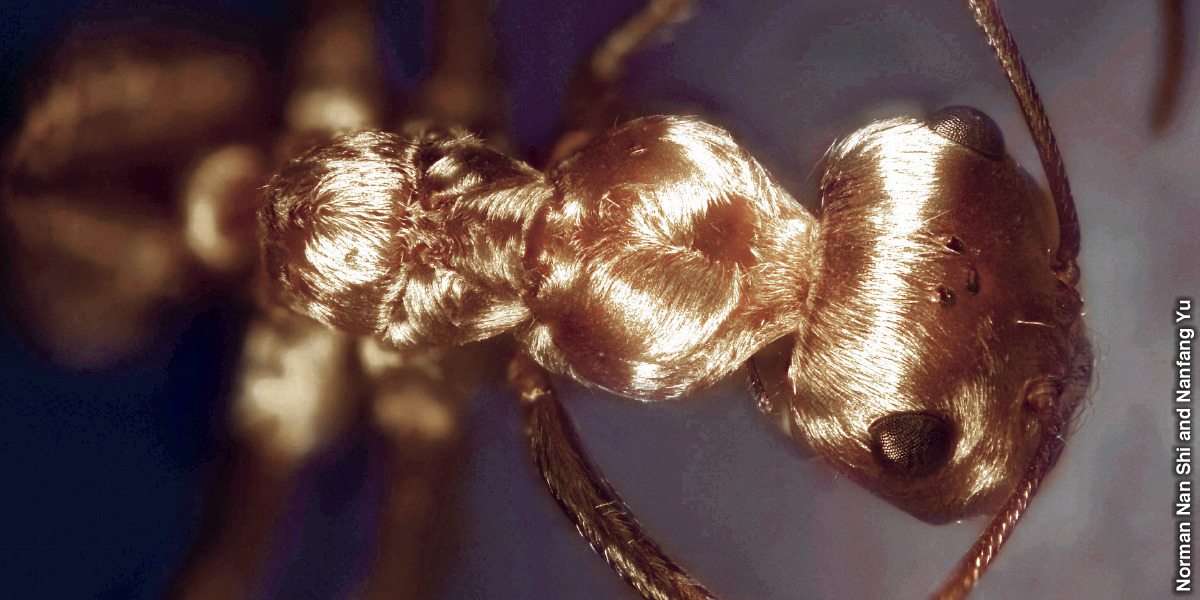
THE Saharan silver ant (Cataglyphis bombycina) is one of the most heat-tolerant land animals known. When the midday Saharan sun forces the ant’s predators to seek shade, the ant makes brief forays from its burrow in search of food, which consists of other insects killed by the intense heat.
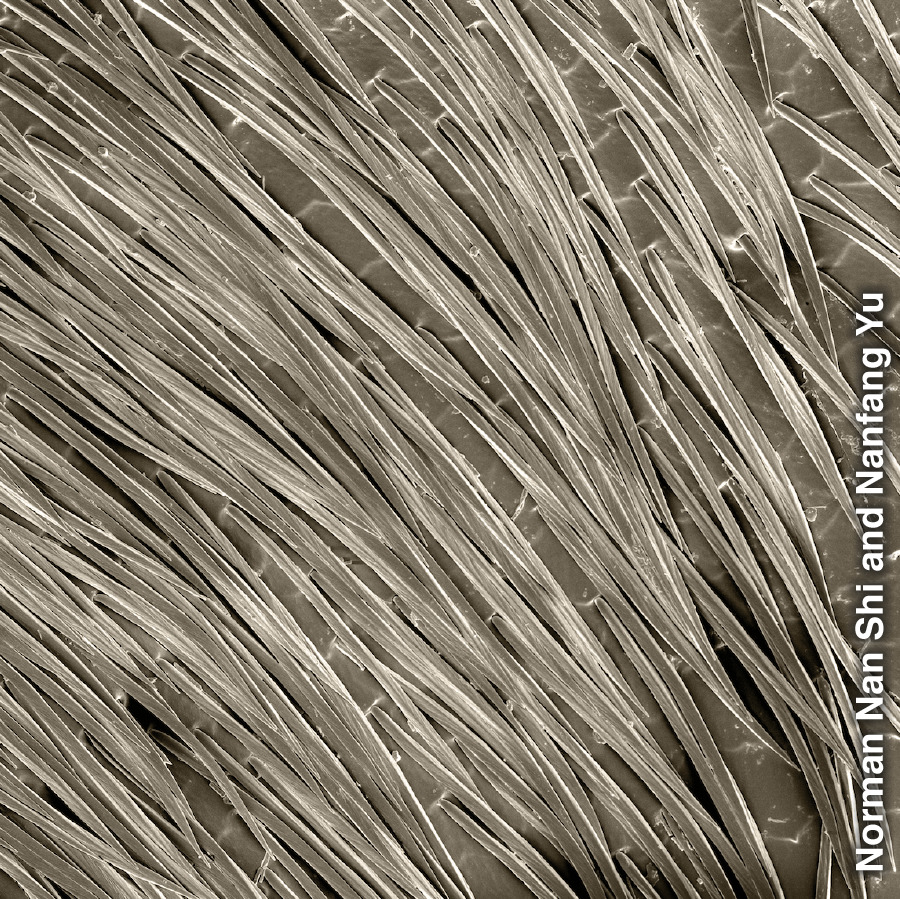
[50] μm
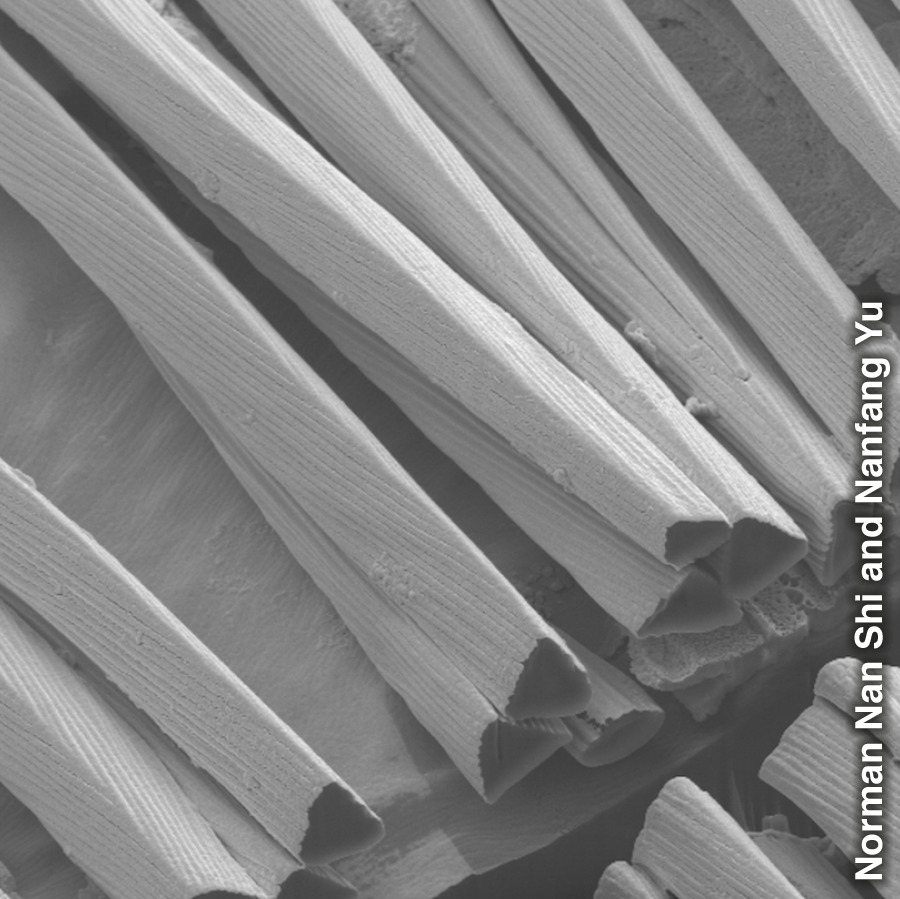
Consider: The silver ant’s assets include a compound heat shield made up of a covering of special hairs on the top and sides of its body and a hairless underside. The hairs, which give the ant a silvery sheen, are tiny tubes with a triangular cross section. Their two outward-facing surfaces have microscopic corrugations that run the length of the hair, while the inward-facing surface is smooth. This design serves two functions. First, it enables the hairs to reflect solar radiation in the visible and near-infrared ranges. Second, it helps the ant to dissipate body heat absorbed from the environment. Meanwhile, the ant’s hairless underside reflects radiation that is in the mid-infrared range and emanates from the desert floor
The Saharan silver ant’s compound heat shield helps the insect to keep its body temperature below the maximum it can tolerate—128.5 degrees Fahrenheit (53.6°C). Inspired by that tiny creature, researchers are working to develop special coatings that enhance passive cooling—that is, cooling without the aid of fans or other devices.
What do you think? Did the compound heat shield of the Saharan silver ant come about by evolution? Or was it designed
Cleanliness is vital for an insect if it is to fly, climb, and sense its surroundings. For example, dirty antennae reduce an ant’s ability to navigate, communicate, and pick up scents. So “you will never find a dirty insect,” says zoologist Alexander Hackmann. “They’ve figured out how to cope with surface contamination.”
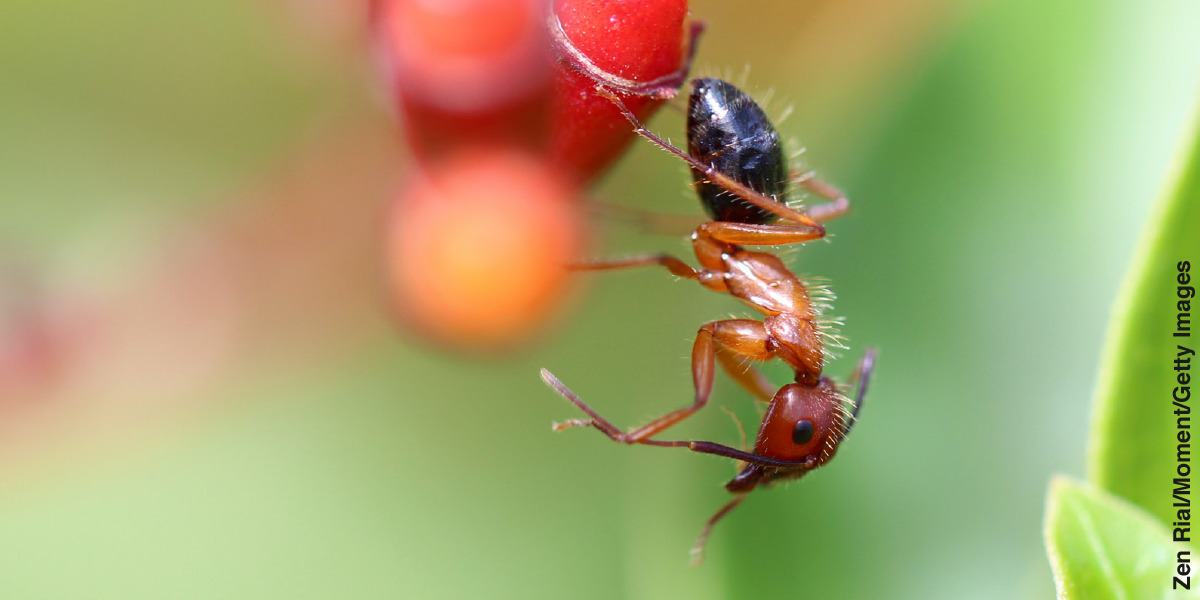
Consider: Hackmann and his colleagues studied the mechanism that a species of carpenter ant (Camponotus rufifemur) uses to clean its antennae. They found that the ant removes particles of different sizes from its antennae by bending its leg to form a kind of clamp and then pulling each antenna through the clamp. Coarse bristles in the clamp knock off the largest pieces of dirt. Smaller contaminants are removed by a fine comb that has gaps exactly the same width as the hairs on the ant’s antennae. Then the smallest particles—as tiny as 1/80th the diameter of a human hair—are removed by the bristles of an even finer brush.
Watch a carpenter ant clean its antennae
Hackmann and his team believe that the mechanism used by ants to keep their antennae clean could find application in industry. For example, similar methods would be useful in maintaining cleanliness during the manufacture of delicate microelectronic components and semiconductors, where even minor contamination can result in defects.
What do you think: Did the carpenter ant’s efficient antenna cleaner evolve? Or was it designed
MECHANICAL ENGINEERS marvel at the ability of a common ant to lift weights many times heavier than its own body. To understand this ability, engineers at Ohio State University, U.S.A., reverse engineered some of the ant’s anatomy, physical properties, and mechanical functions by means of computer models. The models were created using X-ray cross-sectional images (micro CT scans) and simulations of the forces an ant generates when carrying loads
A critical part of the ant’s anatomy is its neck, which has to bear the full weight of loads grasped in its mouth. Soft tissues within the ant’s neck bind with the stiff exoskeleton of its thorax (body) and head in a manner that mimics the interlocking of fingers in folded hands. “The design and structure of this interface is critical for the performance of the neck joint,” says one of the researchers. “The unique interface between hard and soft materials likely strengthens the adhesion and may be a key structural design feature that enables the large load capacity of the neck joint.” Researchers hope that a clear grasp of how the ant’s neck functions will contribute to advancements in the design of man-made robotic mechanisms.
What do you think? Did the ant’s neck with its complex and highly integrated mechanical systems evolve? Or was it designed
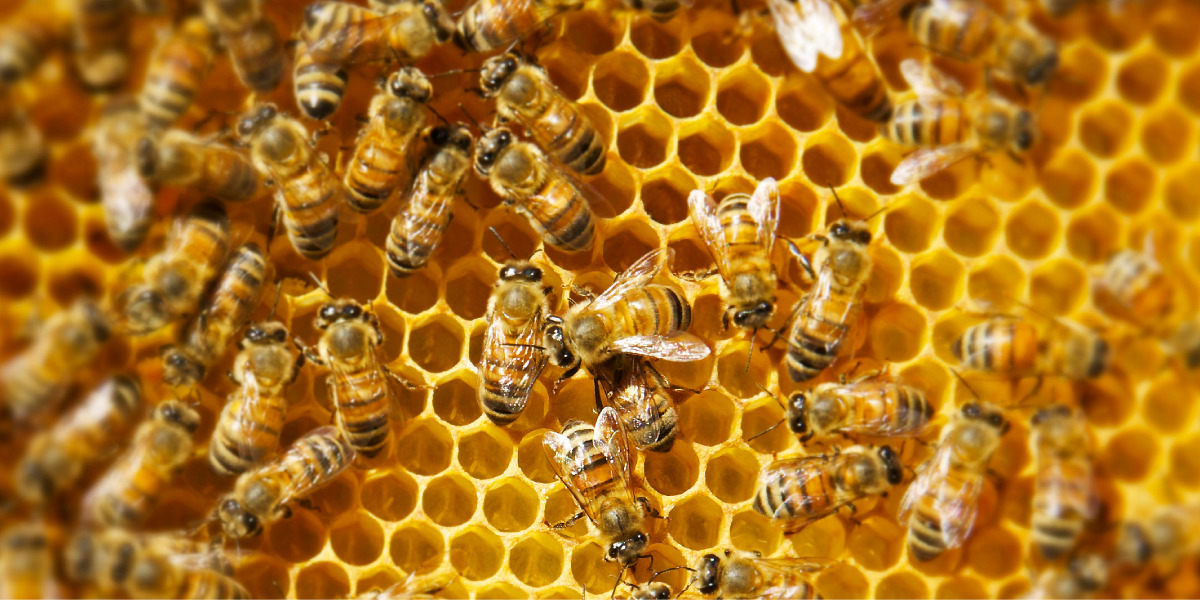
HONEYBEES (Apis mellifera) construct their honeycombs with wax secreted from glands found on the underside of their abdomen. The honeycomb is regarded as an engineering marvel. Why?
Consider: For centuries, mathematicians suspected that partitions in the shape of hexagons were better than equilateral triangles or squares—or any other shape—for maximizing space with the least amount of building material. But they could not fully explain why. In 1999, Professor Thomas C. Hales provided mathematical proof for the advantage of what he termed “honeycomb conjecture.” He demonstrated that regular hexagons are the best way to divide a space into equal parts with minimal structural support.
By using hexagonal cells, bees can make the best use of all the space available to them, produce a light but sturdy honeycomb with a minimum amount of wax, and store the maximum amount of honey in a given space. Not surprisingly, the honeycomb has been described as “an architectural masterpiece.”
Today, scientists mimic the bees’ honeycomb to create structures that are both resilient and space efficient. Aircraft engineers, for example, use panels patterned after the honeycomb to build planes that are stronger and lighter and thus use less fuel.
What do you think? Did the superior structure of the honeycomb come about by evolution? Or was it designed
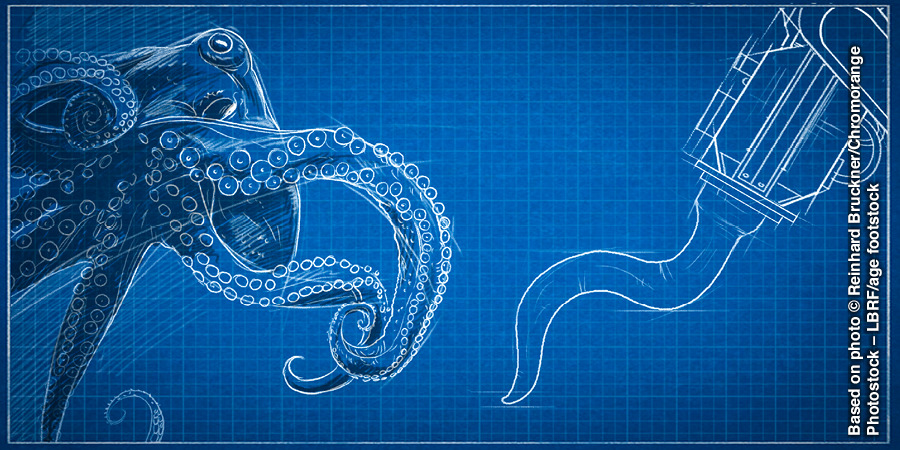
Robotics engineers are developing equipment to help doctors operate in tight spaces in the body using minimally invasive surgical techniques. One innovation in this field is inspired by the highly flexible arm, or tentacle, of the octopus.
Consider: The octopus can grab, hold, and squeeze objects with its eight extendable and flexible arms, even in tiny spaces. Not only can the octopus bend its tentacles in any direction but it can also stiffen different sections of its arms as needed.
Researchers believe that a similarly soft and flexible robotic arm would be invaluable in performing minimally invasive surgery. This kind of equipment could make it possible to operate on patients who otherwise would have to undergo more complex procedures
See the flexible tentacles of the octopus in action
Such a robotic arm has already been developed and is being used in simulated operations. One part of the 135-millimeter (5 in.) arm can manipulate soft internal organs by lifting and holding them without causing any damage to them, while another part performs the actual operation. According to Dr. Tommaso Ranzani, a member of the team that developed the equipment, “we believe this system will be the start for new and improved versions with more advanced features.”
A soft and flexible robotic arm would be invaluable in surgery
What do you think? Did the arm of the octopus evolve? Or was it designed?
In recent years, scientists and engineers have, in a very real sense, allowed plants and animals to instruct them. (Job 12:7, 8) They are studying and mimicking the design features of various creatures—a field known as biomimetics—in an effort to create new products and improve the performance of existing ones. As you consider the following examples, ask yourself, ‘Who really deserves the credit for these designs?’
Learning From the Whale’s Flippers
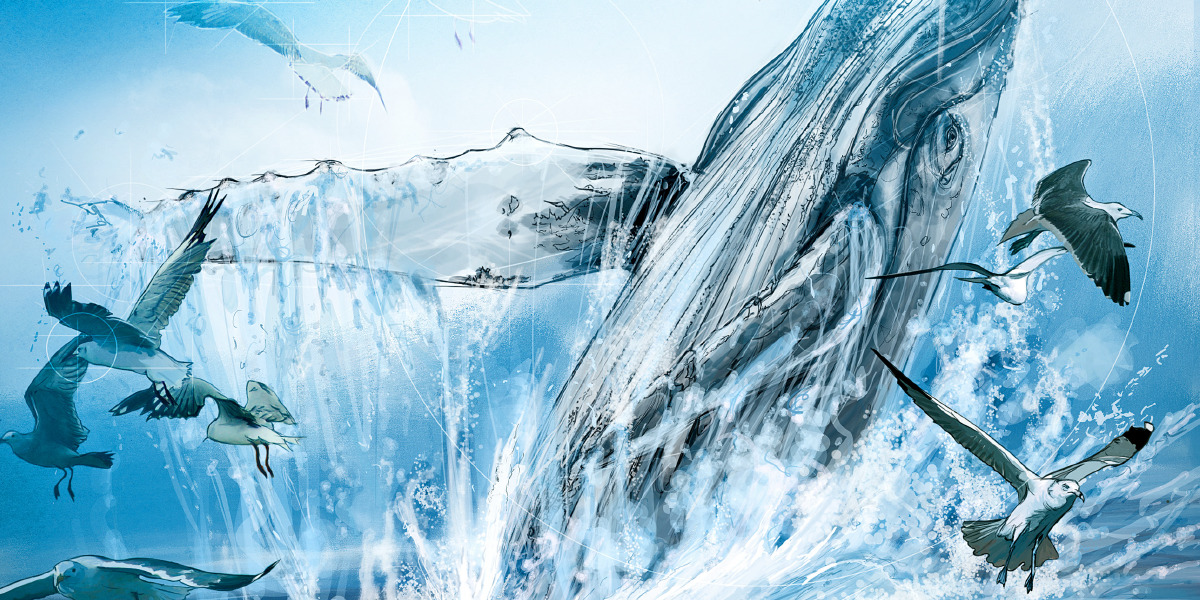
What can aircraft designers learn from the humpback whale? A great deal, it seems. An adult humpback weighs about 30 tons—as much as a loaded truck—and has a relatively stiff body with large winglike flippers. This 40-foot-long (12 m) animal is remarkably agile under water.
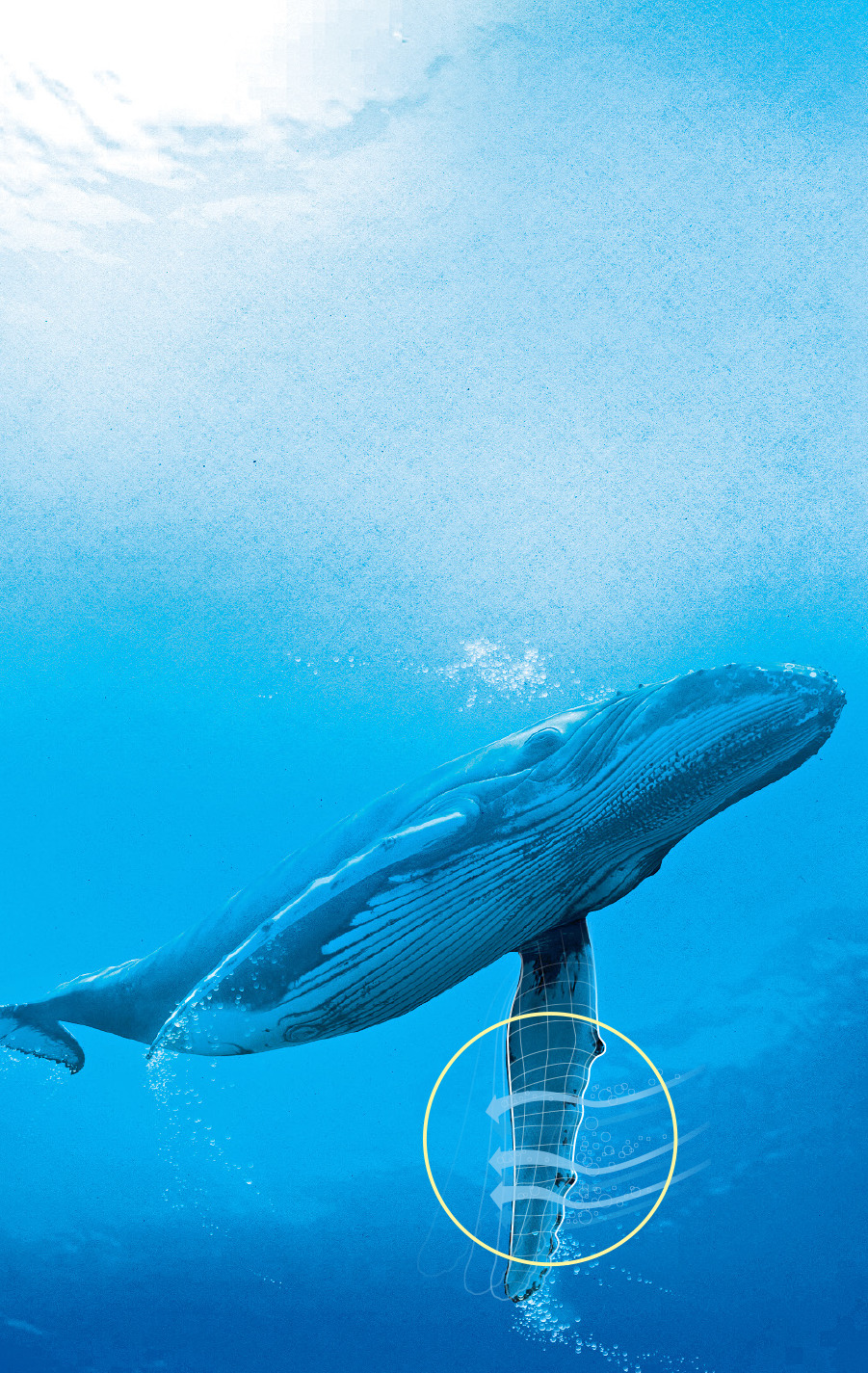
What particularly intrigued researchers was how this stiff-bodied creature could turn in what seem to be impossibly tight circles. They discovered that the secret is in the shape of the whale’s flippers. The leading edge of its flippers is not smooth, like an aircraft wing, but serrated, with a row of protruding bumps called tubercles
What particularly intrigued researchers was how this stiff-bodied creature could turn in what seem to be impossibly tight circles. They discovered that the secret is in the shape of the whale’s flippers. The leading edge of its flippers is not smooth, like an aircraft wing, but serrated, with a row of protruding bumps called tubercles.
As the whale slices through the water, these tubercles increase lift and reduce drag. How? The journal Natural History explains that the tubercles make the water accelerate over the flipper in an organized, rotating flow, even when the whale is rising at very steep angles.10
Who is nature’s patent holder?
What practical applications does this discovery promise? Aircraft wings based on the design would evidently need fewer wing flaps or other mechanical devices to alter airflow. Such wings would be safer and easier to maintain. Biomechanics expert John Long believes that someday soon “we may well see every single jetliner with the bumps of humpback whale flippers.”11
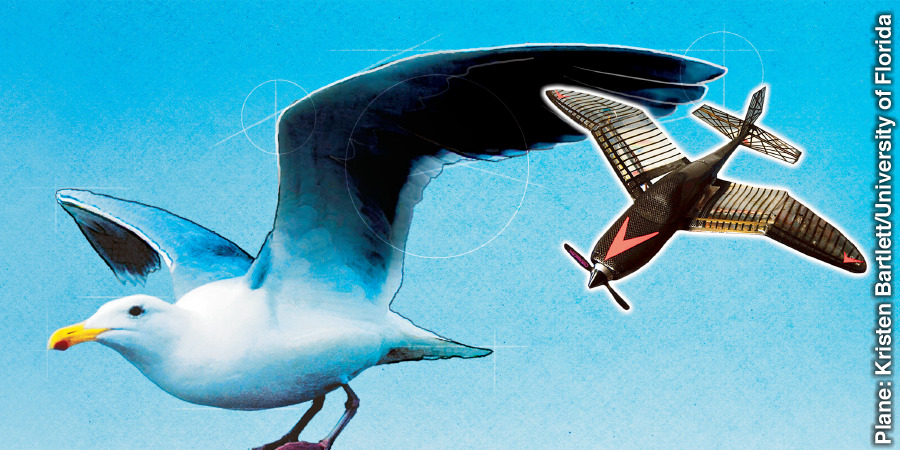
Mimicking the Seagull’s Wings
Of course, aircraft wings already mimic the shape of birds’ wings. However, engineers have recently taken this mimicry to new heights. “Researchers at the University of Florida,” reports New Scientist, “have built a prototype remote-controlled drone with a seagull’s ability to hover, dive and climb rapidly
Seagulls perform their remarkable aerobatic maneuvers by flexing their wings at the elbow and shoulder joints. Copying this flexible wing design, “the 24-inch prototype drone uses a small motor to control a series of metal rods that move the wings,” says the magazine. These cleverly engineered wings enable the small aircraft to hover and dive between tall buildings. Some military personnel are keen to develop such a highly maneuverable craft for use in searching for chemical or biological weapons in big cities
Copying the Seagull’s Leg
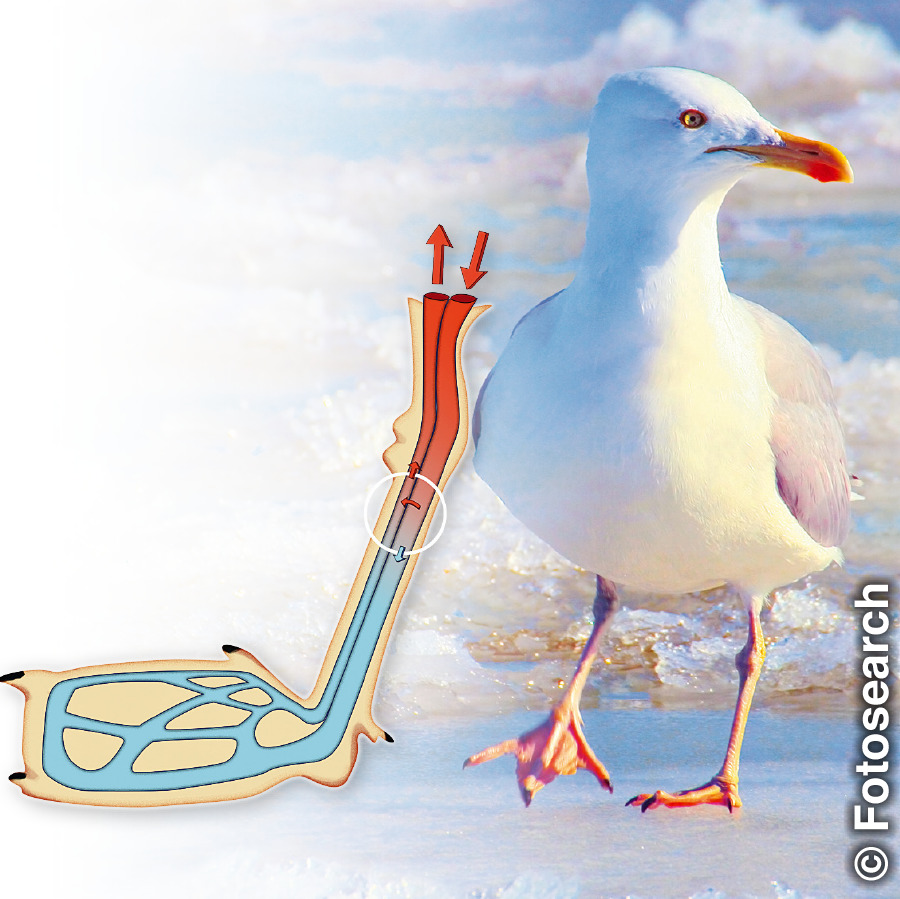
A seagull does not freeze, even while standing on ice. How does this creature conserve its body heat? Part of the secret is in a fascinating design feature found in a number of animals that dwell in cold regions. It is called the countercurrent heat exchanger.
Heat transfers, remains in the body. Cold stays in the feet
What is a countercurrent heat exchanger? To understand it, picture two water pipes strapped closely together. Hot water flows in one pipe, and cold, in the other. If both the hot water and the cold water flow down the pipes in the same direction, about half of the heat from the hot water will transfer to the cold. However, if the hot water and the cold water flow in opposite directions, nearly all the heat will transfer from the hot water to the cold.
When a seagull stands on ice, the heat exchangers in its legs warm the blood as it returns from the bird’s cold feet. The heat exchangers conserve heat in the bird’s body and prevent heat loss from its feet. Arthur P. Fraas, a mechanical and aeronautical engineer, described this design as “one of the world’s most effective regenerative heat exchangers.”13 This design is so ingenious that human engineers have copied it.
Who Deserves the Credit?
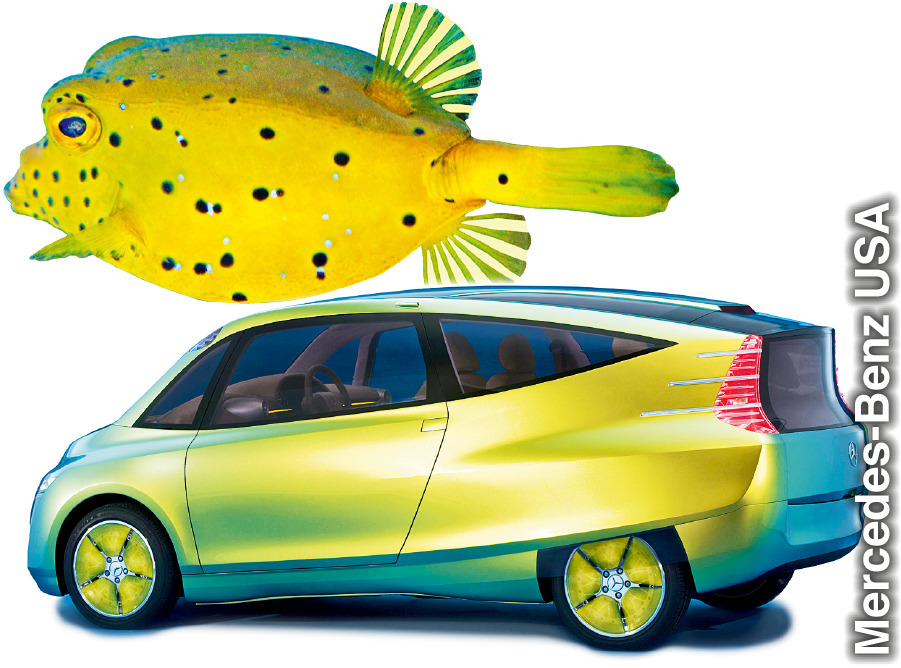
A concept car imitates the surprisingly low-drag and stable design of the boxfish
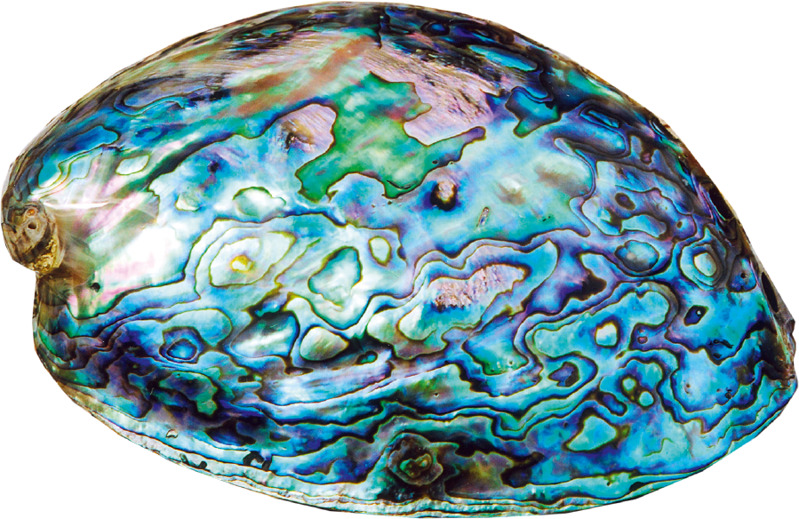
Meanwhile, the National Aeronautics and Space Administration is developing a multilegged robot that walks like a scorpion, and engineers in Finland have already developed a six-legged tractor that can climb over obstacles the way a giant insect would. Other researchers have designed fabric with small flaps that imitate the way pinecones open and close. Such fabric adjusts to the body temperature of the wearer. A car manufacturer is developing a vehicle that imitates the surprisingly low-drag design of the boxfish. And other researchers are probing the shock-absorbing properties of abalone shells, with the intention of making lighter, stronger body armor.
Sonar in dolphins is superior to the human imitation
So many good ideas have come from nature that researchers have established a database that already catalogs thousands of different biological systems. Scientists can search this database to find “natural solutions to their design problems,” says The Economist. The natural systems held in this database are known as biological patents. Normally, a patent holder is a person or a company that legally registers a new idea or machine. Discussing this biological patent database, The Economist says: “By calling biomimetic tricks ‘biological patents’, the researchers are just emphasising that nature is, in effect, the patent holder
Scientists are researching the shock-absorbing properties of abalone shells
How did nature come up with all these brilliant ideas? Many researchers would attribute the seemingly ingenious designs evident in nature to millions of years of evolutionary trial and error. Other researchers, though, arrive at a different conclusion. Microbiologist Michael J. Behe wrote in The New York Times of February 7, 2005: “The strong appearance of design [in nature] allows a disarmingly simple argument: if it looks, walks and quacks like a duck, then, absent compelling evidence to the contrary, we have warrant to conclude it’s a duck.” His opinion? “Design should not be overlooked simply because it’s so obvious
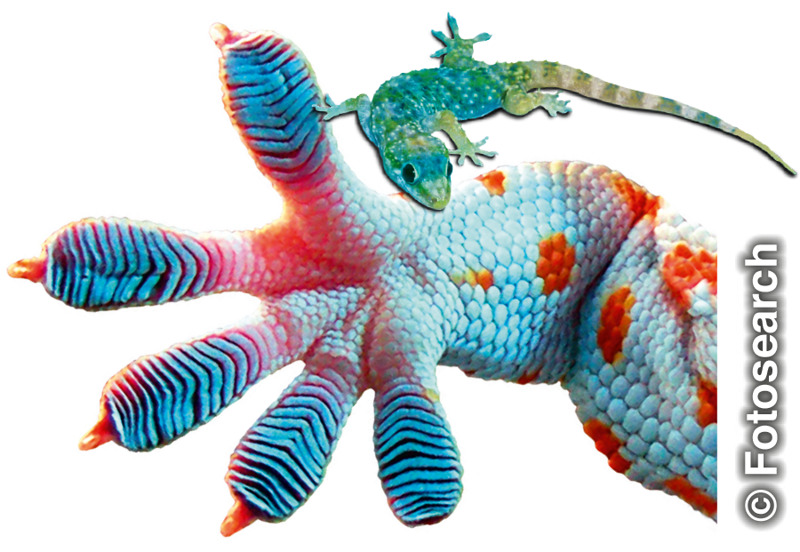
The gecko can cling to the smoothest of surfaces by using molecular forces
Surely, the engineer who designs a safer, more efficient aircraft wing would deserve to receive credit for his or her design. Likewise, the inventor who devises a more comfortable clothing material or a more efficient motor vehicle deserves credit for his or her design. In fact, a manufacturer who copies someone else’s design but fails to acknowledge or credit the designer may be viewed as a criminal.
Now consider these facts: Highly trained researchers crudely mimic systems in nature to solve difficult engineering problems. Yet, some would attribute the genius of devising the original idea to unintelligent evolution. Does that sound reasonable to you? If the copy requires an intelligent designer, what about the original? Really, who deserves more credit, the master engineer or the apprentice who imitates his designs?
A Logical Conclusion
After reviewing evidence of design in nature, many people echo the sentiments of the Bible writer Paul, who said: “[God’s] invisible qualities are clearly seen from the world’s creation onward, because they are perceived by the things made, even his eternal power and Godship.”—Romans 1:19, 20.
How Would You Reply?
Does it seem logical to you to believe that the brilliant engineering evident in nature came about by accident?
How would you answer the claim that life only appears to be designed?
Was It Designed?
If the copy requires a designer, what about the original?
Fibers
Man-made product: Kevlar is a tough man-made fiber used in such items as bulletproof vests. To manufacture Kevlar, high temperatures and hazardous solvents are required.
Natural product: Orb-weaving spiders produce seven types of silk. The sturdiest, known as dragline silk, is lighter than cotton yet, ounce for ounce, is stronger than steel and tougher than Kevlar. If enlarged to the size of a football field, a web of dragline silk 0.4 inch (1 cm) thick with strands 1.6 inches (4 cm) apart could stop a jumbo jet in flight! Spiders produce dragline silk at room temperature, using water as a solvent
Navigation
Man-made product: Some commercial airliners have computerized autopilot systems that can not only guide a plane from one country to another but also land the plane. The computer used in one experimental autopilot system is about the size of a credit card.
Natural product: Using a brain the size of the tip of a ballpoint pen, the monarch butterfly migrates up to 1,800 miles (3,000 km) from Canada to a small patch of forest in Mexico. This butterfly relies on the sun to help it navigate, and it has the ability to compensate for the movement of the sun across the sky.
Lenses
Man-made product: Engineers have developed an artificial compound eye that fits 8,500 lenses into a space the size of a pinhead. Such lenses could be used in high-speed motion detectors and ultrathin multidirectional cameras.
Natural product: Each eye of a dragonfly is made up of some 30,000 lenses. These lenses produce images that combine to create a wide mosaic view. The compound eyes of the dragonfly are superb at detecting movement.
Life on earth could never exist were it not for a series of very fortunate “coincidences,” some of which were unknown or poorly understood until the 20th century. Those coincidences include the following:
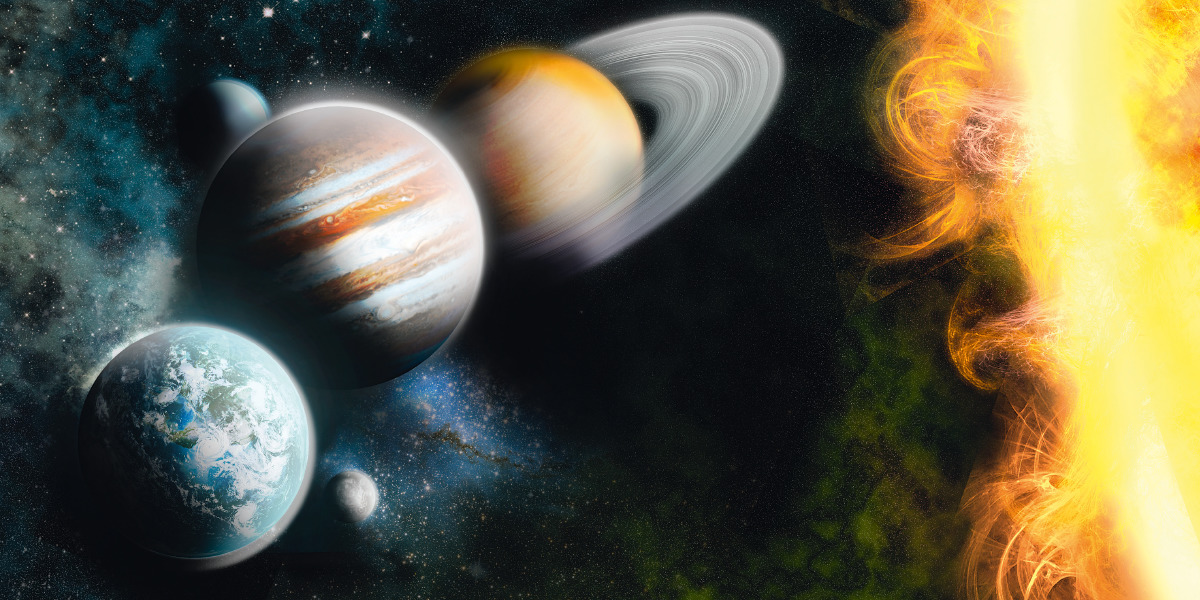
Earth’s location in the Milky Way galaxy and the solar system, as well as the planet’s orbit, tilt, rotational speed, and unusual moon
A magnetic field and an atmosphere that serve as a dual shield
Natural cycles that replenish and cleanse the planet’s air and water supply
As you consider each of these topics, ask yourself, ‘Are earth’s features a product of blind chance or of purposeful design?’
Earth’s Perfect “Address”
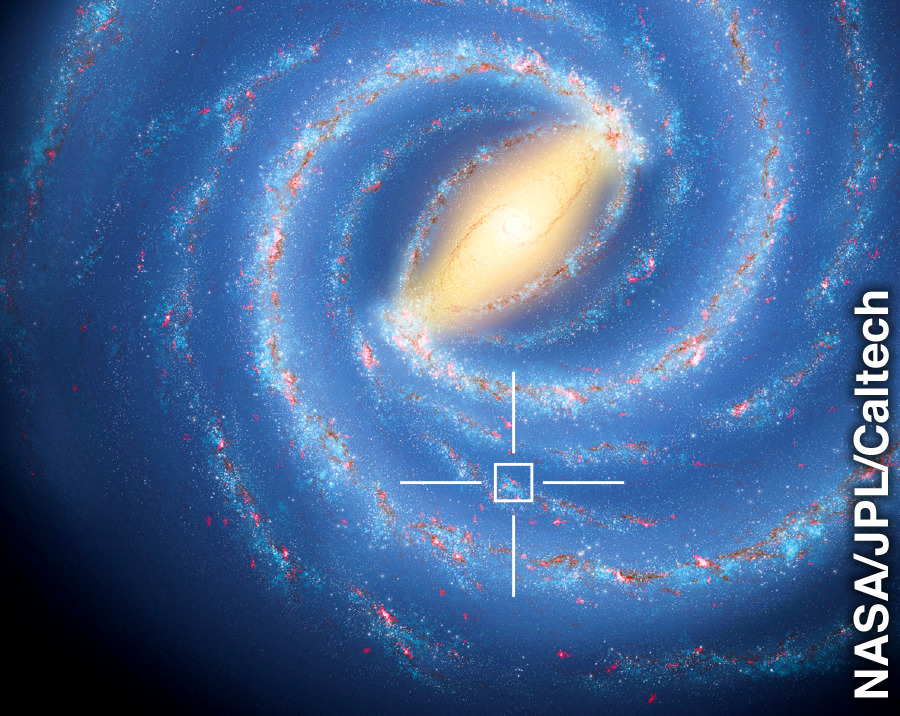
Could the earth be located in a better position to host life?
When you write down your address, what do you include? You might put in your country, city, and street. By way of comparison, let’s call the Milky Way galaxy earth’s “country,” the solar system—that is, the sun and its planets—earth’s “city,” and earth’s orbit within the solar system earth’s “street.” Thanks to advances in astronomy and physics, scientists have gained deep insights into the merits of our special spot in the universe
To begin with, our “city,” or solar system, is located in the ideal region of the Milky Way galaxy—not too close to the center and not too far from it. This “habitable zone,” as scientists call it, contains just the right concentrations of the chemical elements needed to support life. Farther out, those elements are too scarce; farther in, the neighborhood is too dangerous because of the greater abundance of potentially lethal radiation and other factors. “We live in prime real estate,” says Scientific American magazine.1
The ideal “street”: No less “prime” is earth’s “street,” or orbit within our solar system “city.” About 93 million miles (150 million km) from the sun, this orbit lies within a limited zone that is habitable because life neither freezes nor fries. Moreover, earth’s path is almost circular, keeping us roughly the same distance from the sun year-round.
The sun, meanwhile, is the perfect “powerhouse.” It is stable, it is the ideal size, and it emits just the right amount of energy. For good reason, it has been called “a very special star.”2
The perfect “neighbor”: If you had to choose a “next-door neighbor” for the earth, you could not improve on the moon. Its diameter measures just over a quarter of that of the earth. Thus, when compared with other moons in our solar system, our moon is unusually large in relation to its host planet. Mere coincidence? It seems unlikely.
For one thing, the moon is the principal cause of ocean tides, which play a vital role in earth’s ecology. The moon also contributes to the planet’s stable spin axis. Without its tailor-made moon, our planet would wobble like a spinning top, perhaps even tipping right over and turning on its side, as it were! The resulting climatic, tidal, and other changes would be catastrophic.
Earth’s perfect tilt and spin: Earth’s tilt of about 23.4 degrees causes the annual cycle of seasons, moderates temperatures, and allows for a wide range of climate zones. “Our planet’s tilt axis seems to be ‘just right,’” says the book Rare Earth—Why Complex Life Is Uncommon in the Universe.3
Also “just right” is the length of day and night, a result of earth’s spin. If the speed of rotation were substantially slower, the days would be longer and the side of the earth facing the sun would bake while the other side would freeze. Conversely, if the earth were to spin much faster, the days would be shorter, perhaps just a few hours long, and earth’s rapid spin would cause relentless gale-force winds and other harmful effects
Earth’s Protective Shields
Space is a dangerous place where lethal radiation is common and meteoroids are an ever-present danger. Yet, our blue planet seems to fly through this galactic “shooting gallery” with relative impunity. Why? Because earth is protected by amazing armor—a powerful magnetic field and a custom-made atmosphere.
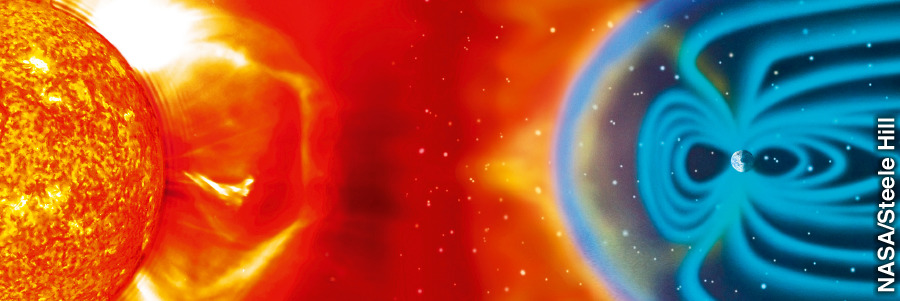
The earth’s invisible magnetic shield
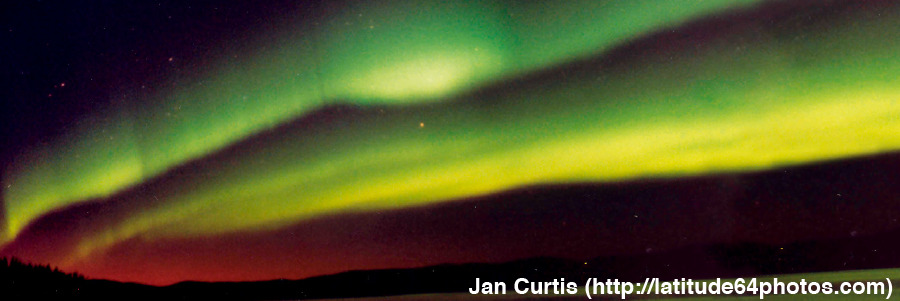
Earth’s magnetic field: The center of the earth is a spinning ball of molten iron, which causes our planet to have a huge and powerful magnetic field that stretches far into space. This shield protects us from the full intensity of cosmic radiation and from potentially deadly forces emanating from the sun. The latter include the solar wind, which is a steady stream of energetic particles; solar flares, which in minutes release as much energy as billions of hydrogen bombs; and explosions in the outer region, or corona, of the sun, which blast billions of tons of matter into space. You can see visible reminders of the protection you receive from the earth’s magnetic field. Solar flares and explosions in the sun’s corona trigger intense auroras, colorful displays of light visible in the upper atmosphere near earth’s magnetic poles.
Aurora borealis
Earth’s atmosphere: This blanket of gases not only keeps us breathing but also provides additional protection. An outer layer of the atmosphere, the stratosphere, contains a form of oxygen called ozone, which absorbs up to 99 percent of incoming ultraviolet (UV) radiation. Thus, the ozone layer helps to protect many forms of life—including humans and the plankton we depend on to produce much of our oxygen—from dangerous radiation. The amount of stratospheric ozone is not fixed. Rather, it changes, growing as the intensity of UV radiation rises. So the ozone layer is a dynamic, efficient shield.
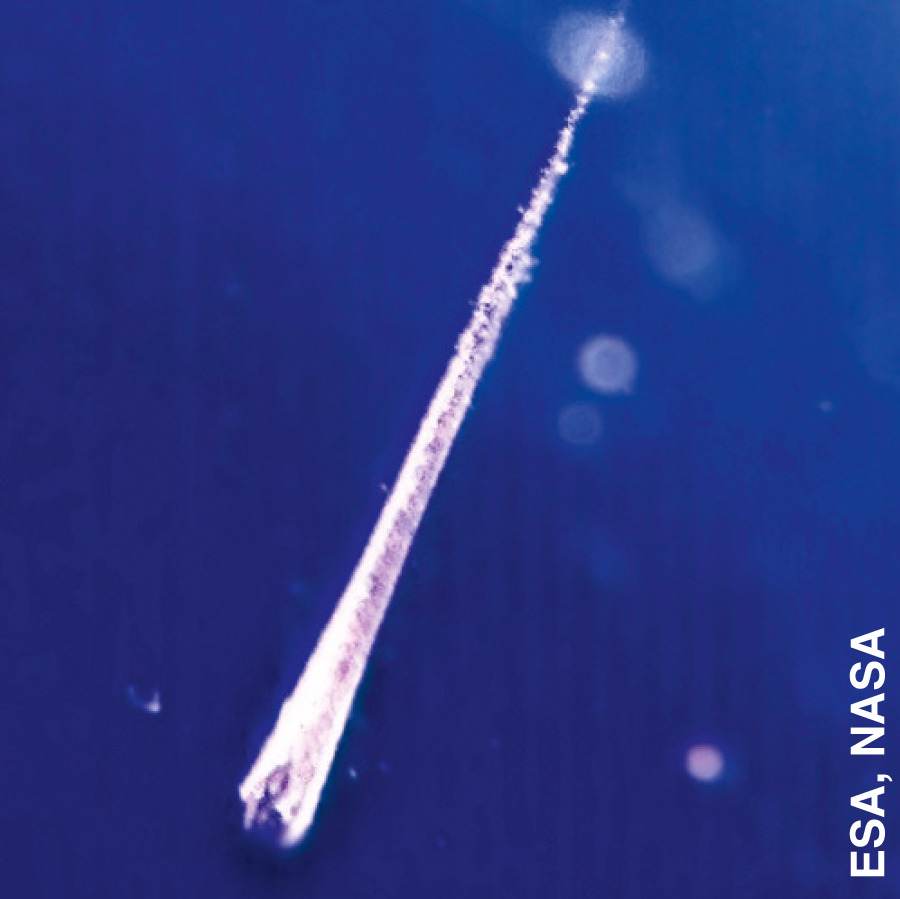
The atmosphere protects us from meteors
The atmosphere also protects us from a daily barrage of debris from space—millions of objects ranging in size from tiny particles to boulders. By far the majority of these burn up in the atmosphere, becoming bright flashes of light called meteors. However, earth’s shields do not block radiation that is essential to life, such as heat and visible light. The atmosphere even helps to distribute the heat around the globe, and at night the atmosphere acts as a blanket, slowing the escape of heat.
Earth’s atmosphere and magnetic field truly are marvels of design that are still not fully understood. The same could be said of the cycles that sustain life on this planet
Is it only a coincidence that our planet is protected by two dynamic shields?
Natural Cycles for Life
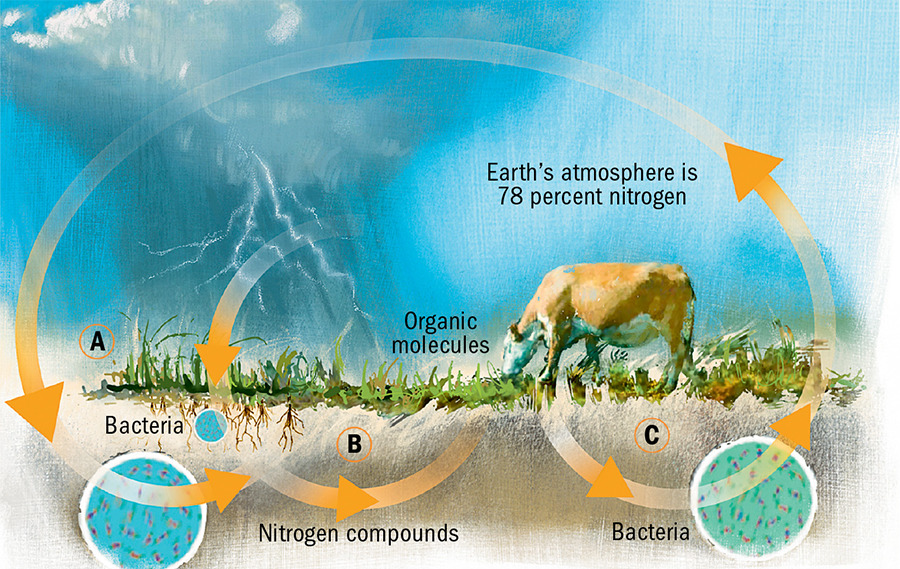
If a city’s supply of fresh air and water were cut and its sewers blocked, disease and death would soon follow. But consider: Our planet is not like a restaurant, where new food and supplies are shipped in from outside and garbage is carted away. The clean air and water we depend on are not shipped in from outer space, nor is waste matter rocketed out. So how does the earth remain healthy and habitable? The answer: the natural cycles, such as water, carbon, oxygen, and nitrogen cycles, explained here and shown simplified.
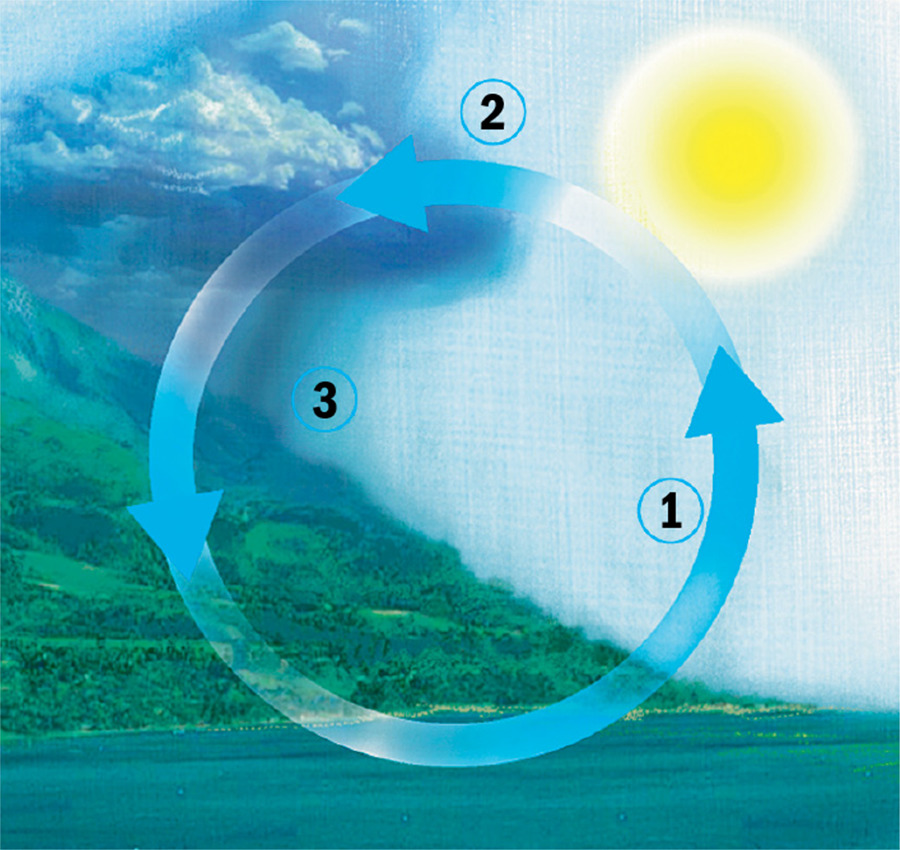
The water cycle: Water is essential to life. None of us can live without it for more than a few days. The water cycle distributes fresh, clean water around the planet. It involves three stages. (1) Solar power lifts water into the atmosphere by evaporation. (2) Condensation of this purified water produces clouds. (3) Clouds, in turn, form rain, hail, sleet, or snow, which falls to the ground, ready to evaporate again, thus completing the cycle. How much water is recycled annually? According to estimates, enough to cover the earth’s surface uniformly to a depth of more than two and a half feet (80 cm)
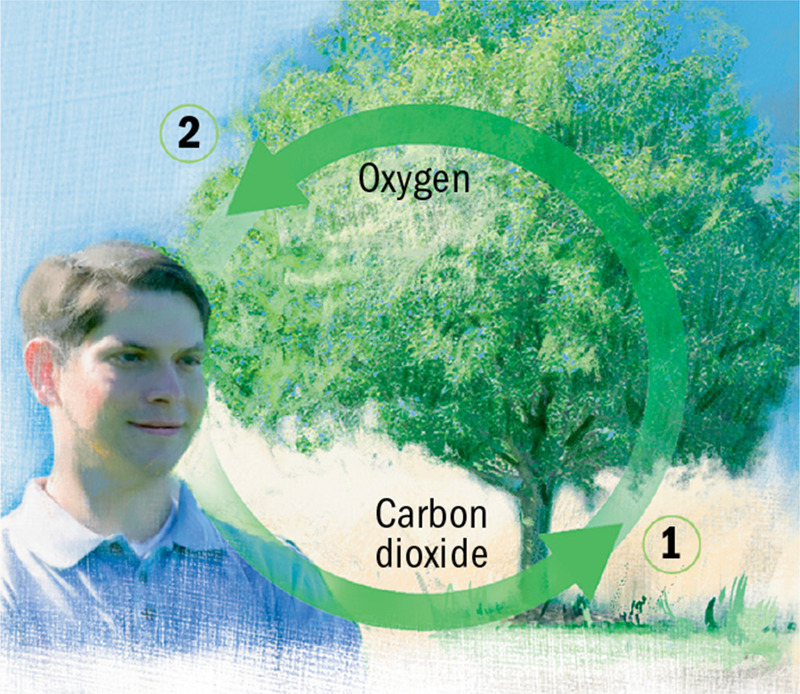
The carbon and oxygen cycles: As you know, in order to live you need to breathe, to take in oxygen and give out carbon dioxide. But with countless billions of humans and animals doing the same thing, why does our atmosphere never run out of oxygen and become overloaded with carbon dioxide? The answer lies in the oxygen cycle. (1) In an amazing process called photosynthesis, plants take in the carbon dioxide that we exhale, using it and the energy from sunlight to produce carbohydrates and oxygen. (2) When we take in oxygen, we complete that cycle. All this production of vegetation and breathable air happens cleanly, efficiently, and quietly
The nitrogen cycle: Life on earth also depends on the production of such organic molecules as proteins. (A) To produce those molecules, nitrogen is needed. Happily, that gas makes up about 78 percent of our atmosphere. Lightning converts nitrogen into compounds that plants can absorb. (B) Then plants incorporate those compounds into organic molecules. Animals that eat those plants thus also acquire nitrogen. (C) Finally, when plants and animals die, the nitrogen compounds in them are broken down by bacteria. That process of decay releases nitrogen back into the soil and atmosphere, completing the cycle.
Perfect Recycling!
Humans, with all their advanced technology, create countless tons of unrecyclable toxic waste annually. Yet, the earth recycles all its wastes perfectly, using ingenious chemical engineering.
How do you think the earth’s recycling systems arose? “If the Earth’s ecosystem had truly evolved by chance alone, it wouldn’t possibly have been able to reach such a perfect level of environmental harmony,” says religion and science writer M. A. Corey.5 Do you agree with his conclusion?
How Would You Reply?
Do you feel that the earth’s features are the product of purposeful design? If so, which of the above facts do you find most convincing?
How would you respond to the claim that the earth is nothing special, just another setting where evolution could occur?
Teeming With Life
No one knows how many species there are on earth. Estimates vary from 2 million to 100 million.6 How pervasive is life on our planet?
Earth: Just one hundred grams (3.5 ounces) of soil has been found to host 10,000 species of bacteria,7 not to mention the total number of microbes. Some species have been found almost two miles (3 km) underground!8
Air: In addition to the birds, bats, and insects that fly through the air, the atmosphere is filled with pollen and other spores, as well as seeds and—in certain areas—thousands of different kinds of microbes. The diversity of microbial life in the air is “on par with the diversity of microbes in the soil,” says Scientific American magazine.9
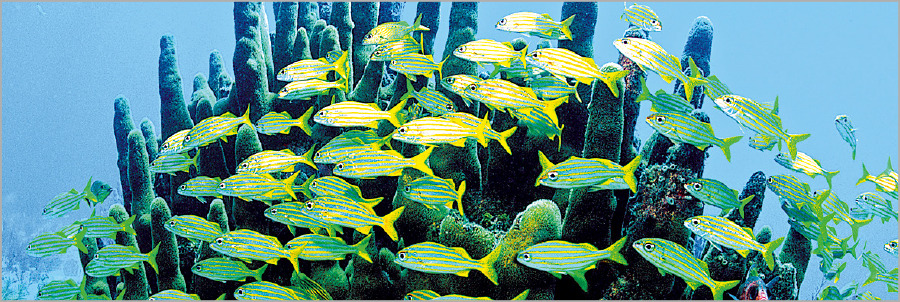
Water: The oceans remain largely a mystery because in order to study the watery deep, scientists often have to use costly technology. Even coral reefs, which are relatively accessible and are well-surveyed, may host millions of yet unknown species.
Did this impressive variety of life arise by chance? Many would agree with the poet who wrote: “How many your works are, O Jehovah! All of them in wisdom you have made. The earth is full of your productions.” *—Psalm 104:24.
Many religious fundamentalists believe that the earth and everything on it was created in six 24-hour days, just a few thousand years ago. Some atheists would have you believe that God does not exist, that the Bible is a book of myths, and that all life is the product of random, undirected events.
The majority of people hold views that are somewhere between these opposing ideas. The fact that you are reading this brochure likely indicates that you are one of them. You may believe in God and respect the Bible. But you may also value the opinion of highly trained and influential scientists who do not believe that life was created. If you are a parent, you may wonder how to answer your children when they ask questions about evolution and creation.
What Is the Purpose of This Brochure?
It is not the purpose of this material to ridicule the views either of fundamentalists or of those who choose not to believe in God. Rather, it is our hope that this brochure will prompt you to examine again the basis for some of your beliefs. It will present an explanation of the Bible’s account of creation that you may not have previously considered. And it will emphasize why it really does matter what you believe about how life began.
Will you trust the claims of those who say that there is no intelligent Creator and that the Bible is unreliable? Or will you examine what the Bible actually says? Which teachings are worthy of your trust, your faith: those of the Bible or those of evolutionists? (Hebrews 11:1) Why not review the facts?











 Worldwide Footstep Articles & Ads